
Last updated September 19, 2026
Full 25-point door and opener safety check with every visit - springs, cables, rollers, tracks, and your LiftMaster or Chamberlain opener included
You get a price before we start. It does not change when the truck arrives.
Chamberlain openers
 Before
 After
After Before
 After
After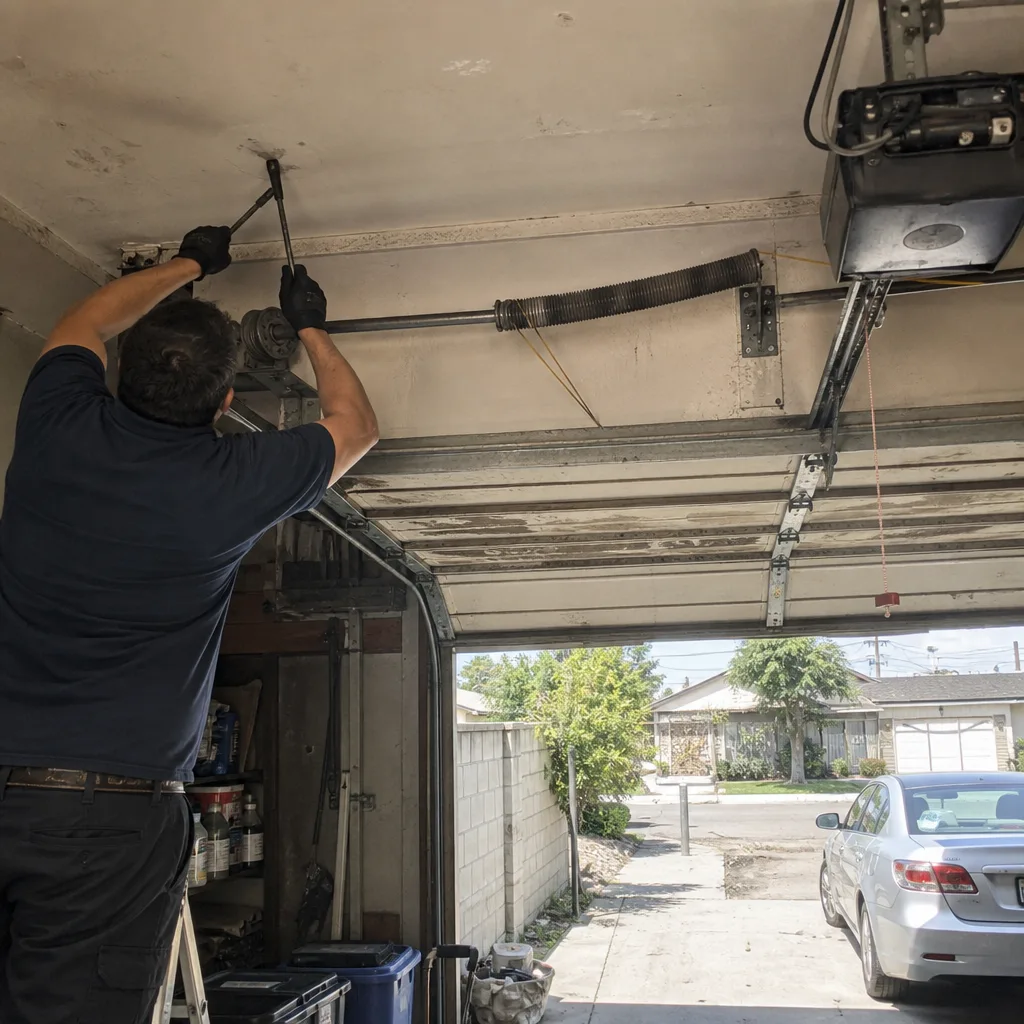 Before
 After
AfterSeasonal Garage Door Care for Long Beach: Year-Round Homeowner’s Guide
Standard seasonal maintenance guides divide the year into spring, summer, fall, and winter. In Long Beach, that framework is almost useless: January and July can share the same temperature, but the marine layer in June puts more moisture load on your bottom seal and cable drums than any “winter” month ever will. This guide replaces the generic four-season model with a Long Beach-specific calendar built around what actually happens to your garage door here: corrosion from salt air, UV degradation on south-facing panels, Santa Ana wind stress on tracks and seals, and the slow creep of misalignment that comes from decades of thermal cycling in a city where the temperature barely moves but the humidity swings hard. What follows is the maintenance rhythm we’ve learned from thousands of doors in Long Beach over the past decade, organized by the weather patterns that actually drive failure here. For The Complete Guide to Garage Door in Long Beach and more guides & resources, see our blog..
Quick Answer
Seasonal garage door care in Long Beach means checking four things on a rotating schedule: bottom seal integrity and cable drum moisture during the May-through-July marine layer window, track alignment and opener force settings after October’s Santa Ana winds, south- and west-facing panel UV degradation every August, and a 90-second balance test every February before the warm-season use cycle begins. Most Long Beach homeowners can handle the visual checks themselves, but any finding that involves torsion springs, cables under tension, or track adjustment warrants a professional visit before the door fails outright. See our DIY vs Professional Garage Door: The Long Beach Homeowner’s Decision Guide to know when to call a pro.
Table of Contents
- The Long Beach Climate Calendar: Four Seasons That Actually Matter
- May Through July: The Marine Layer Protocol
- October Through November: The Santa Ana Wind Checklist
- August: UV Degradation on South- and West-Facing Doors
- The 90-Second Balance Test: Your Annual Inspection Trigger
- Rollers, Tracks, and the Lubrication Schedule Long Beach Actually Needs
- Opener Force Settings and the Santa Ana Problem
- Common Mistakes to Avoid
- When to Call a Professional
- Frequently Asked Questions
- The Bottom Line
BeforeAfterThe Long Beach Climate Calendar: Four Seasons That Actually Matter
Long Beach doesn’t have a winter that kills garage door components. What it has is a sequence of environmental stresses that arrive in a predictable order each year, and each one attacks a different set of parts. Here’s how the year actually breaks down from a garage door’s perspective:
February Through April: The Settlement Window
This is the overlooked season. After the previous year’s Santa Ana winds and before the marine layer settles in, the soil beneath your garage slab does something subtle: it dries out. Long Beach sits on a mix of sandy loam and clay in many neighborhoods, from Los Altos to the Park Estates corridor, and clay soil shrinks when it dries. A garage slab that shifts by a quarter inch can change the relationship between the track and the door just enough to cause uneven wear on rollers and guide rails. We consistently see the highest number of track misalignment service calls in March and April, not because anything dramatic happened, but because the ground moved quietly over several months and nobody noticed until the door started binding on one side.
May Through July: Marine Layer Season
June Gloom is not a trivia fact; it’s a humidity event that runs for weeks, not days. The marine layer pins moist air against the coast from San Pedro up through Signal Hill and into the Long Beach flatlands, and that moisture works its way into every unsealed surface on your garage door. Galvanized steel hardware is rated for intermittent moisture, not the sustained 70-80% relative humidity Long Beach gets during these months. The components that suffer first are the bottom weatherstrip, cable drums, and any exposed steel in the spring anchor brackets. This season is covered in full below.
August Through September: UV and Heat Season
By August, the marine layer burns off earlier and Long Beach gets its steadiest run of direct sun. South- and west-facing garage doors absorb the brunt of this, and the damage is cumulative across years, not seasons. A door that’s been exposed since 2018 may look fine from ten feet away but have a finish that’s begun to chalk and micro-crack. The real question is when UV damage crosses from cosmetic to structural, and we cover that threshold in the UV section below.
October Through November: Santa Ana Season
Santa Ana winds are the only Long Beach weather event that applies direct mechanical force to your garage door. Peak gusts in Long Beach during a strong Santa Ana event commonly reach 40-50 mph, with sustained winds in the 20-30 mph range for hours at a time. That’s enough to press a double-wide door inward by a measurable amount, and if the door is already marginal on track alignment or spring balance, the wind will expose it. This is also the season when loose hardware gets loud: a carriage bolt that was one turn loose in July will announce itself in October.
May Through July: The Marine Layer Protocol
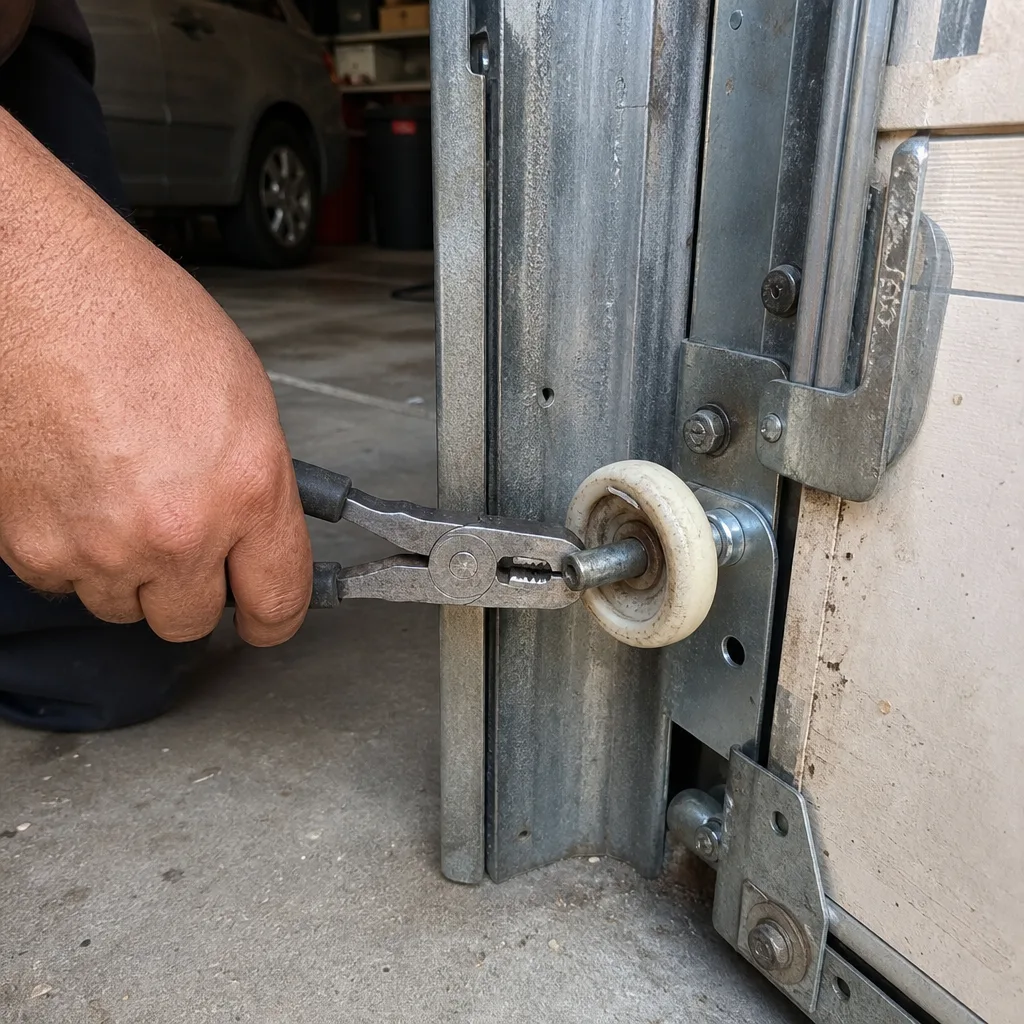
If you do one maintenance pass per year, do it in May. The marine layer season is the most corrosive period Long Beach produces, and it’s the one most homeowners never think about because the temperatures are so mild. Here’s the protocol, in order of priority:
- Bottom weatherstripping: The bottom seal, or astragal, is the first component to fail in sustained humidity because it’s in direct contact with damp concrete and collects condensation on both sides. Run your fingers along the inside edge of the bottom seal. If it feels brittle, cracked, or compressed flat, it’s no longer sealing. A failed bottom seal lets the marine layer into your garage every single night, and it’s also how leaves, dust, and the occasional skunk get in. Replacement is a $60-$120 part-and-labor job on most doors, and it’s the single highest-value seasonal fix for Long Beach homes.
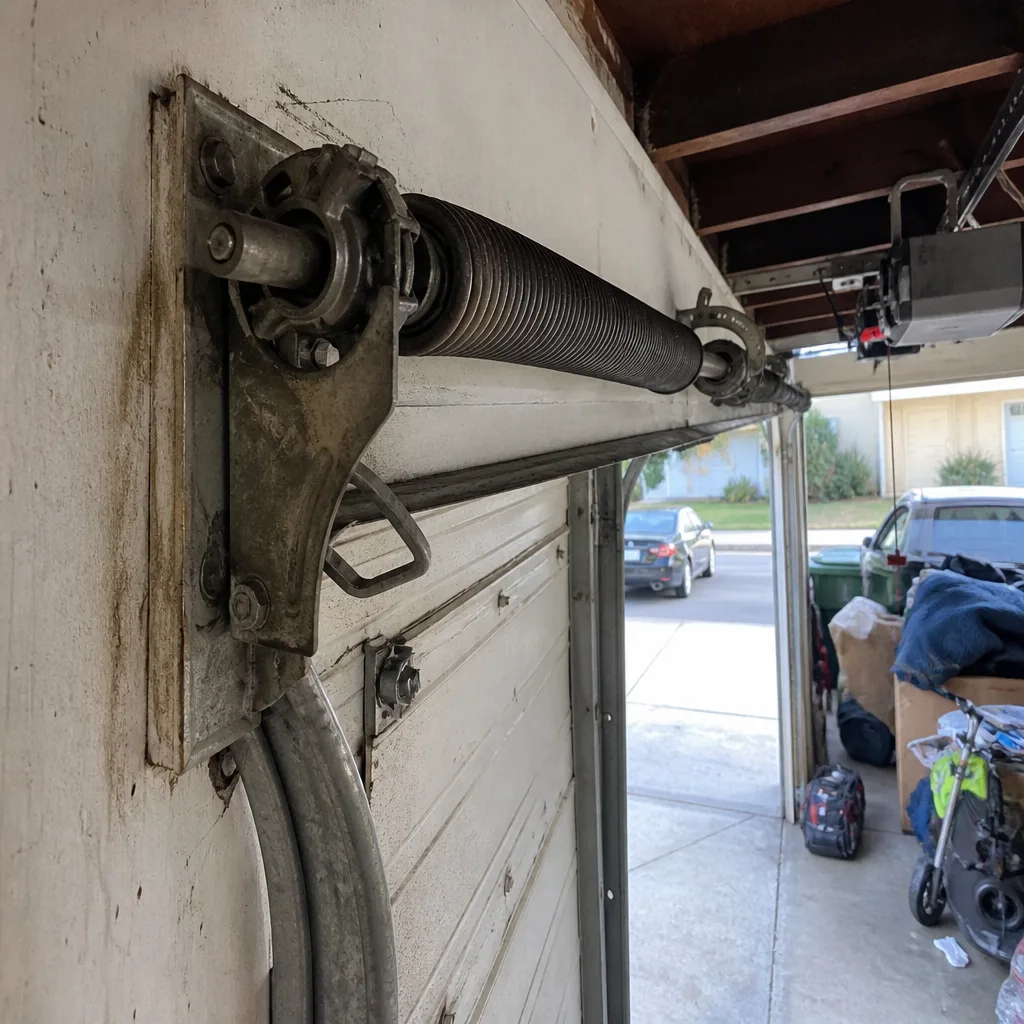
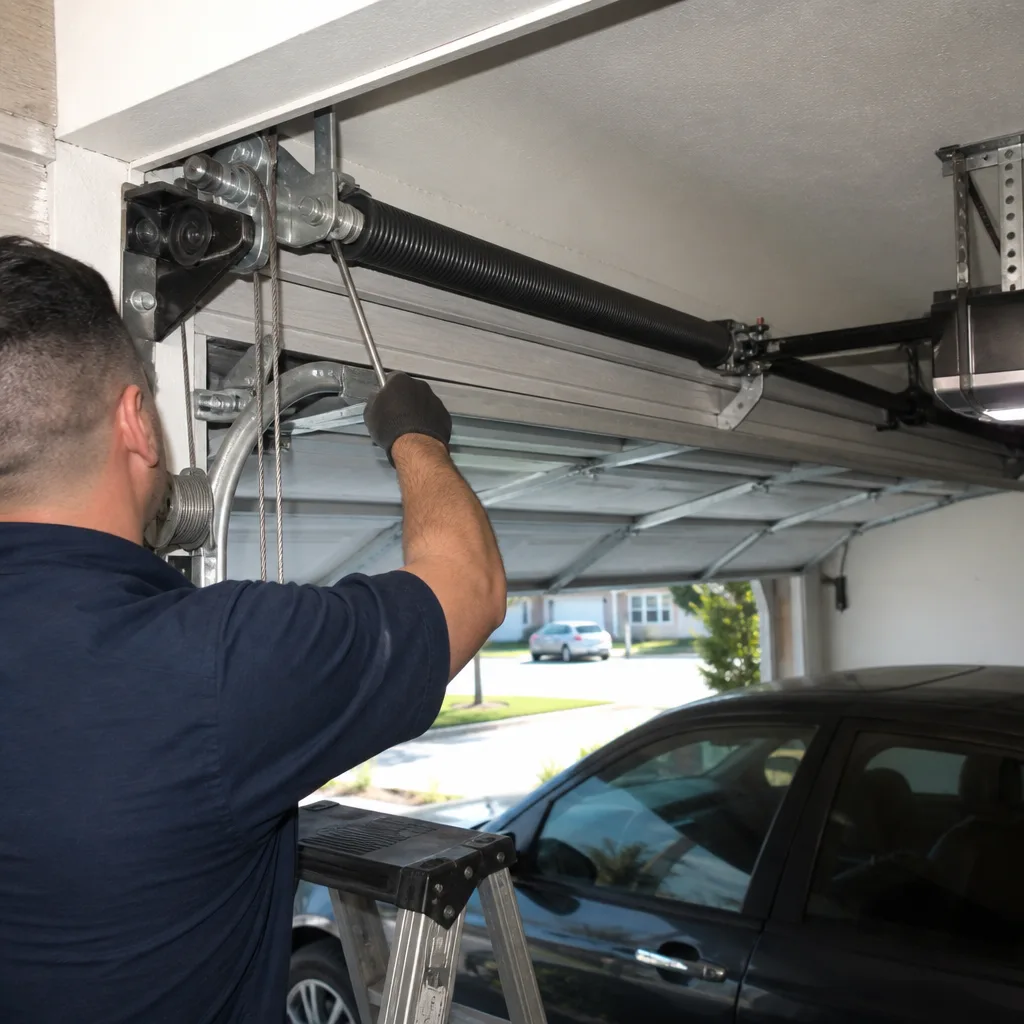
- Cable drums at both ends of the torsion tube: The drums wind and unwind the lift cables, and their machined grooves are zinc-plated. Under repeated high-humidity exposure, that plating develops white rust (zinc oxide) and eventually red rust, which changes the friction profile of the groove. You cannot fix this yourself. What you can do is look: if the cable sits proud of the drum groove by any visible amount, or if the cables show kinks or frayed strands near the drum, have a professional inspect it before it lets go. Cable failure under tension is not a repair scenario; it’s an injury scenario.
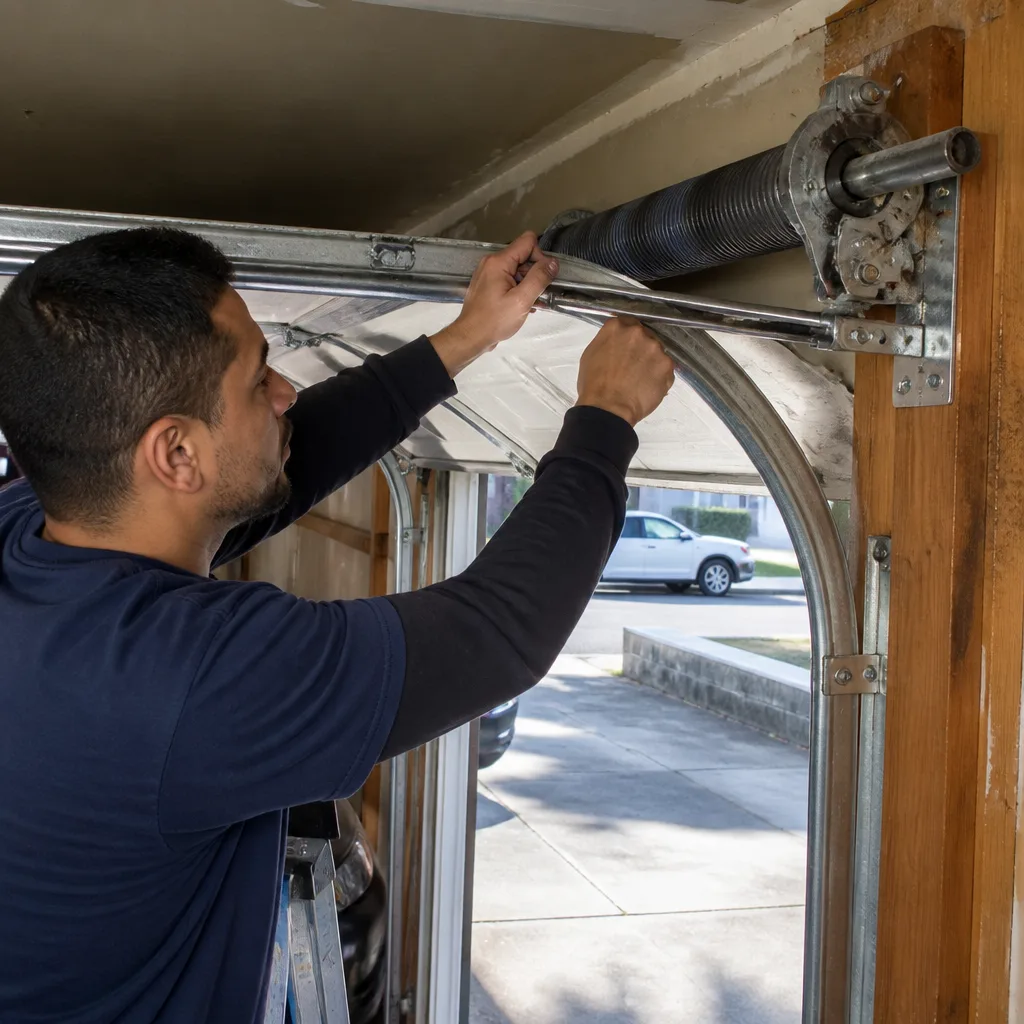
- Spring anchor brackets and bearing plates: These are the steel plates at each end of the torsion tube. In Long Beach’s coastal air, they develop surface rust even inside a finished garage if there’s no source of air movement. Check for rust bloom around the bolt heads. Surface rust on these brackets is often cosmetic, but if it’s progressed to flaking, the bracket’s structural section is thinning and it should be replaced.
- Hinges and track bolts: A squeak when the door cycles is usually a hinge that’s lost lubrication or a track bolt that’s backed out a quarter turn. Tighten bolts that have visible movement, but do not apply force to track bolts that are already snug. Over-tightening track bolts can pull the track out of alignment, and a binding door is worse than a slightly loose bolt.
During marine layer months, we also see a spike in opener logic board failures that looks unrelated but isn’t. The condensation that forms on metal surfaces also forms inside the plastic housing of an opener’s control board, and if the board’s conformal coating is worn or thin, short-term corrosion creates erratic behavior: the door stops mid-cycle, remotes lose sync, or the safety sensor circuit triggers falsely. If your opener acts up only during June Gloom and behaves fine by August, moisture is the likely driver. A garage door opener repair in Long Beach in that scenario is straightforward: the tech opens the housing, documents what the board looks like, and you see the evidence before any quote is written.
October Through November: The Santa Ana Wind Checklist
Santa Ana winds are the only Long Beach weather event that applies real mechanical load to your door system, and they arrive every year. The wind doesn’t usually destroy a healthy door. What it does is exploit weak points that were already developing silently. Here’s the checklist for the October-November window:
- Closed-door deflection check: With the door closed, stand inside the garage and press one palm flat against the door at its center. The door should deflect by no more than half an inch and return. If it deflects more, or if it rattles side to side with light pressure, the door is not sitting firmly against the jamb and the track needs attention. In a 45 mph gust, that free play becomes a lever arm that works every bolt loose.
- Track bracket bolts: Santa Ana winds transfer force from the door panel to the tracks and then to the wall. The bolts that hold vertical track to the framing take the most load. Check every visible bracket during the first Santa Ana event of the season. A bolt that’s backed out two threads is a failure waiting for the second wind event.
- Side and top seal contact: Hold a dollar bill against the jamb with the door closed and try to pull it through the gap between the door and the side seal. If it slides out with no resistance, the seal isn’t doing its job. During Santa Ana season this matters more for dust than temperature: Long Beach neighborhood streets generate fine airborne grit in 30 mph wind, and an unsealed door lets it coat everything in your garage. We see homes along the 405 corridor and in the Los Altos foothill streets get disproportionately dusty garages every October, and the culprit is the side seals, not the wind itself.
- Opener force settings after wind events: This one is counterintuitive. A strong Santa Ana pushes against the door while it’s closed, which means the opener has to work slightly harder to lift an already-loaded door. If your opener’s force limit is set too low, the door stops halfway up and reverses. Homeowners often interpret this as a broken opener. It’s usually a force setting that was calibrated on a calm day. See the force settings section below for how this works.
Santa Ana season is also when we see an uptick in calls for doors that sound broken. A double-wide Clopay or Amarr steel door is a large flat surface, and high wind sets up a low-frequency resonance during the gusts. This is normal and doesn’t require a repair. The sound that does require attention is a metallic clank or a slapping sound while the door operates; that’s usually a roller bearing that’s finally worn through or a hinge pin that’s sheared. The difference between those two sounds is something every homeowner learns after their first full year in Long Beach.
August: UV Degradation on South- and West-Facing Doors
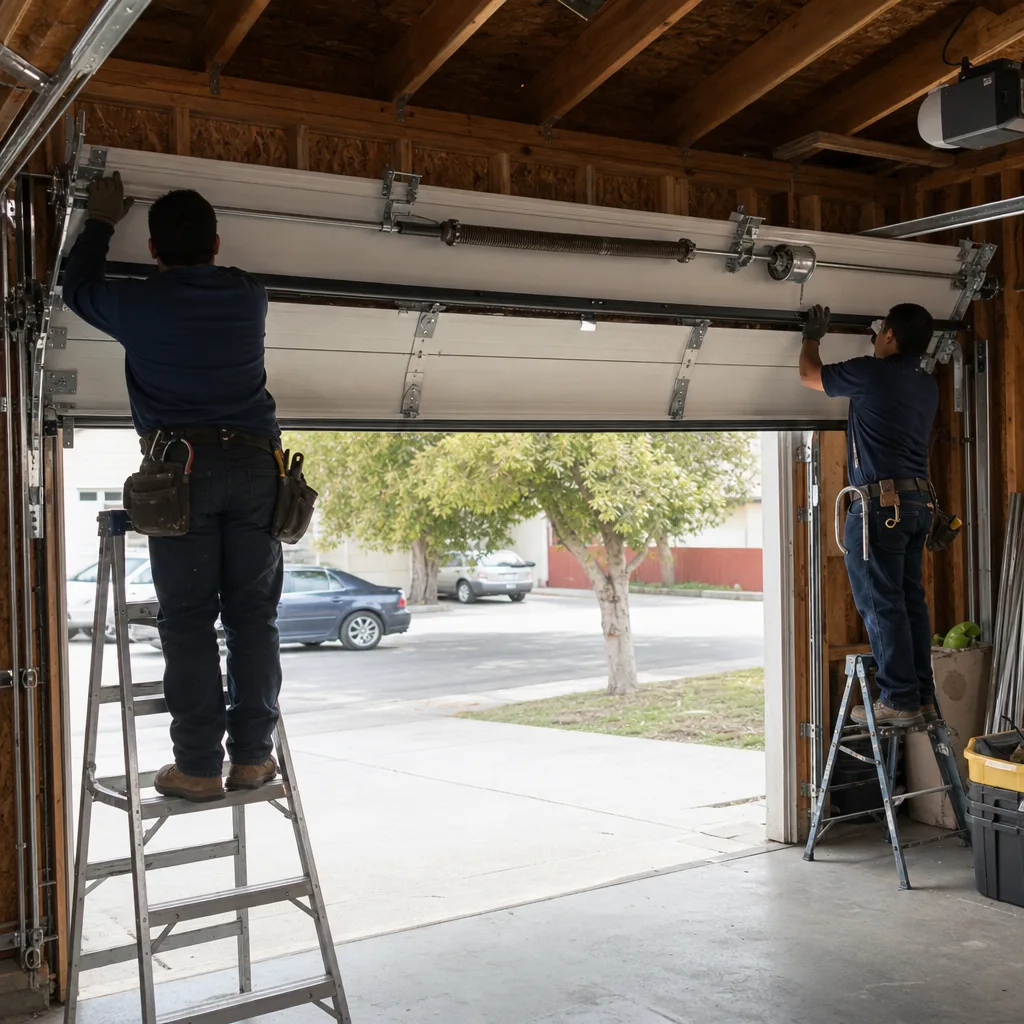
Long Beach is a UV-heavy city by California standards, and south-facing garage doors take the most direct sun exposure of any surface on your house, often for six to eight hours a day during the August through October stretch. The practical question is: when does fading become a structural problem?
Powder-coated steel doors (Clopay and Amarr both use polyester-based powder coats on their entry-level lines) begin to chalk and lose gloss after three to five years of direct Long Beach sun. This is cosmetic and doesn’t require action. What signals substrate compromise is not fading; it’s chalking that’s progressed to visible cracks in the finish, especially around panel edges and the bead where panels meet stiles. Once the finish micro-cracks along those lines, moisture from the marine layer gets under the powder coat and corrosion begins on the steel substrate. That’s when a door stops being reusable and becomes a replacement candidate.
For wood doors, which are less common in Long Beach but still present in older Alamitos Heights and Belmont Heights homes, the threshold is simpler: if you can press a thumbnail into the wood and it leaves a mark, the wood is too soft. UV doesn’t directly damage wood the way moisture does, but it breaks down the clear coat, and the marine layer does the rest.
The practical maintenance item for August is a panel-level finish inspection:
- Stand at a 45-degree angle to the door in direct sun and look across each panel for uneven gloss. You’re looking for patches where the finish has lost its sheen. That’s chalking, and it’s fine.
- Run your hand across the panel surface. If your hand comes away with fine colored powder, the finish is actively degrading. Still cosmetic.
- Look at the horizontal seam between panels. This is where water sits after a morning marine layer, and it’s where corrosion starts. If you see rust bleeding along the panel seam, that’s a structural problem. The door needs professional assessment.
- Check the door’s bottom panel specifically. The bottom panel sits closest to the ground, gets hit by reflected UV from driveways and sidewalks, and catches the most road splash. It’s the panel that fails first on virtually every Long Beach door we replace.
When UV damage crosses into substrate compromise, the door cannot be repaired; it needs garage door installation in Long Beach. The good news is that finish failure is slow. The bad news is that most homeowners don’t check until a panel cracks, and by then the door has been rusting internally for a year or more.
The 90-Second Balance Test: Your Annual Inspection Trigger
If you only remember one thing from this guide, make it this test. It takes 90 seconds, requires no tools, and it tells you more about your door’s health than any visual inspection. Do it once every February, before the warm-season use cycle begins.
The test answers one question: is the door’s weight still matched to its springs? A torsion spring system works by counterbalancing the door’s full weight so that a human or an opener can move it with minimal effort. When a spring loses tension through age or cycle fatigue loading, the door becomes heavier, the opener works harder, and the door wears faster.
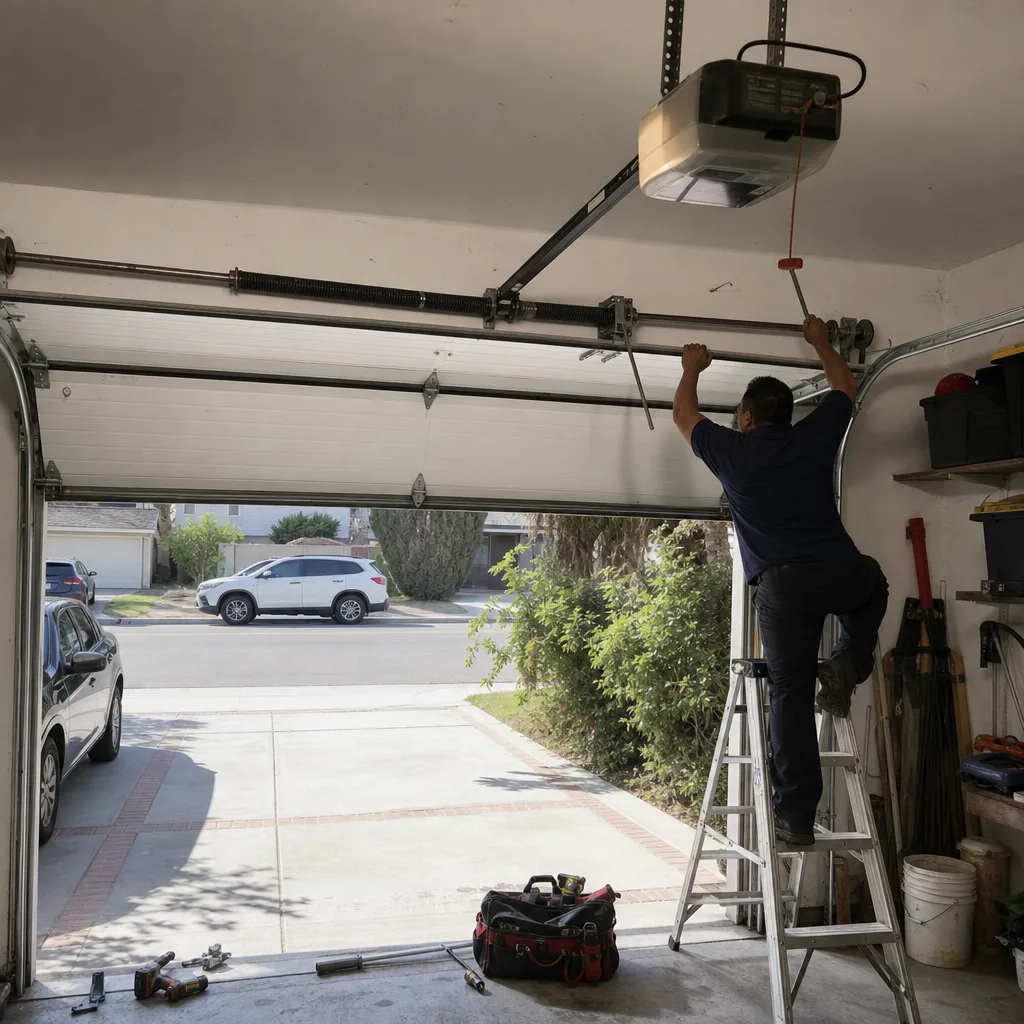
- Disconnect the opener from the door by pulling the emergency release cord. This is the red handle hanging from the trolley. Pull it straight down until it clicks. The door is now free of the opener.
- Lift the door manually by the handle until it’s about waist height, then let go.
- Watch what happens. A properly balanced door will stay where you put it, or drift up or down by no more than a few inches over two or three seconds. If the door drops toward the floor, the springs are losing tension. If it shoots upward, the springs are wound too hot (rare, but seen after someone over-tightens springs without measuring the wire size).
- Reconnect the opener by pressing the wall button briefly. Most openers re-engage automatically on the next cycle.
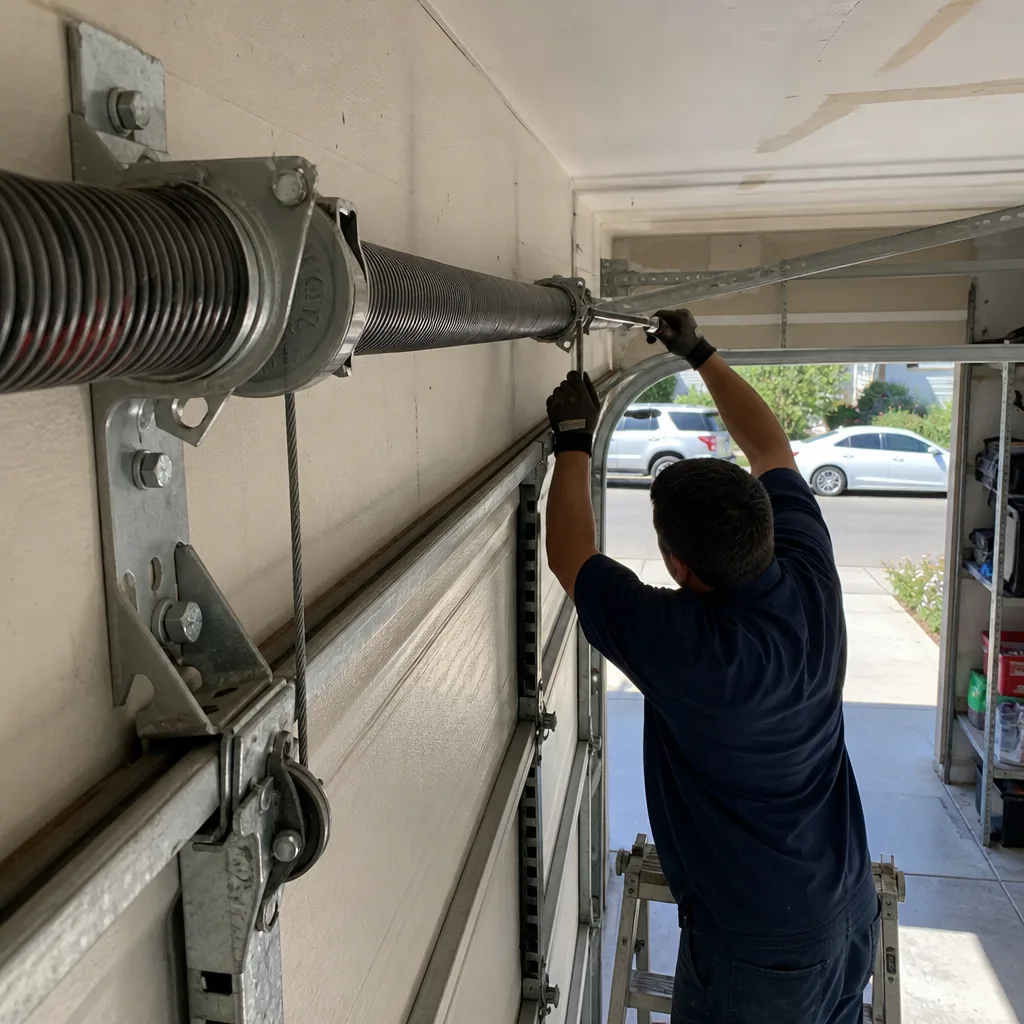
If the door falls in step three, you have a spring system that’s on its way out. The fix is spring replacement, not a new opener, and it’s a professional job for a very specific reason: the torsion spring is wound under enough tension to cause serious injury if it releases unexpectedly. We recommend a pro for anything involving the torsion spring, and when we quote a spring replacement in Long Beach we include the wire diameter and coil count in the written scope, because Clause 4 of The Haven Standard requires that you see the failed part before any replacement is quoted. If you’re unsure whether your springs are original equipment, a 90-second test in February gives you the answer before the heavy-use season starts.
Rollers, Tracks, and the Lubrication Schedule Long Beach Actually Needs
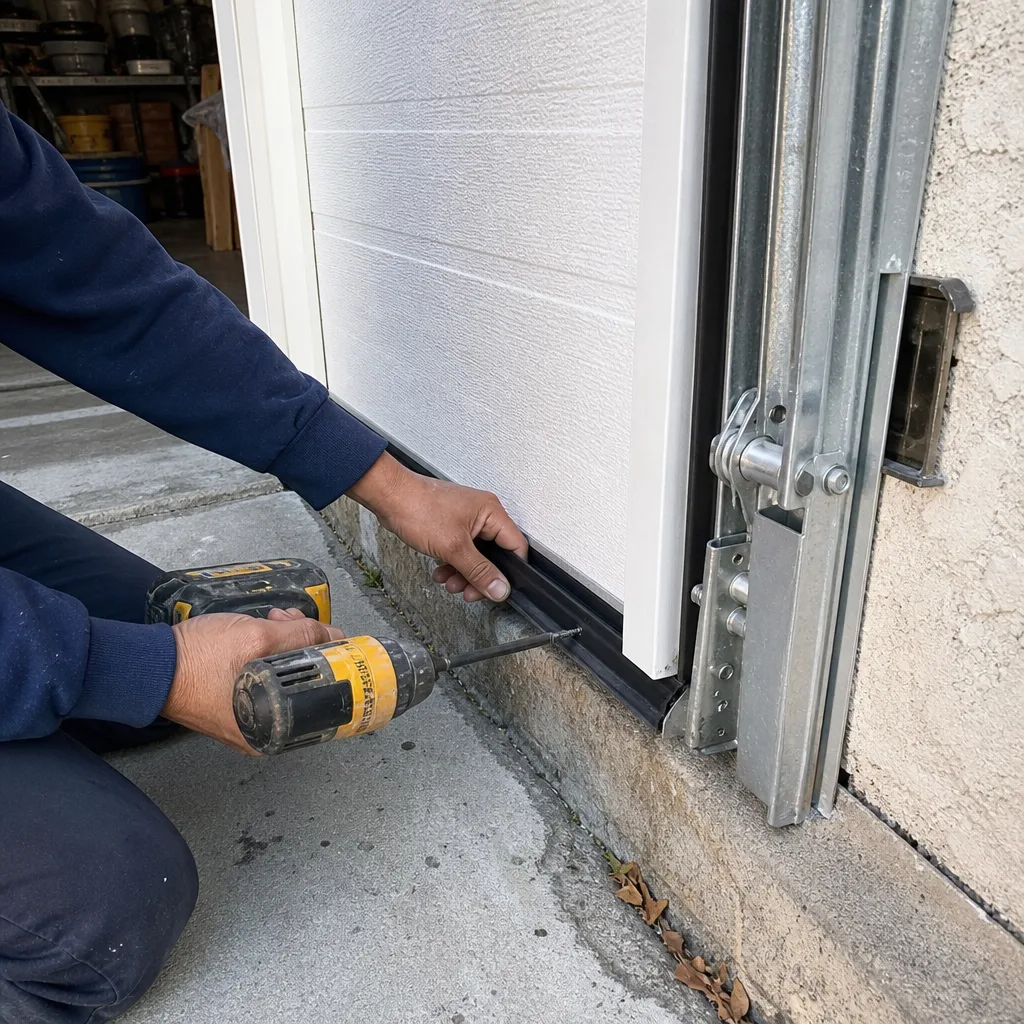
Lubrication advice is the most badly-written topic in garage door maintenance. Most guides say “lubricate twice a year” and stop. The Long Beach-specific answer is: lubricate in May and November, and use the right product. The May lube coat protects moving parts during marine layer humidity. The November coat replaces what the summer heat and Santa Ana dust have stripped away.
The product matters more than the schedule. Use a silicone-based lubricant, not WD-40, not lithium grease, and not anything labeled “garage door lube” that’s really a hydrocarbon spray. WD-40 is a solvent and will strip existing lubrication. Lithium grease attracts grit, and Long Beach Santa Ana season will deliver the grit. Silicone spray lubes without leaving a sticky film, which matters when wind-driven dust coats everything in your garage from October through November.
What to lubricate:
- Roller bearings: Use one or two drops of silicone spray on each roller’s bearing, then cycle the door twice. If a roller is seized, no amount of lube will fix it; replace it. Seized rollers are the main cause of flat spots on steel roller wheels, and a flat-spotted roller feels like a bump every time the door passes that section of track. Replacement rollers are a $10-$20 part per roller.
- Hinge pivot pins: Each hinge on the door has pivot pins that bear the weight of the panels above. A dry hinge pivot is the source of most garage door squeaks. One drop per pin, twice a year, keeps things quiet.
- Torsion spring: A light coat of silicone on the spring itself slows surface rust. If the spring is already showing red rust, don’t bother lubricating it; have it inspected. A rusted spring hasn’t necessarily lost tension, but rust indicates it’s been in service long enough that a tension check is warranted.
- Track: Never lubricate the track itself. The track is designed for the roller to ride on a clean, dry surface, and any lubricant on it becomes a paste when dust collects. If the track looks dirty, wipe it with a dry cloth.
During the May marine layer pass, also check for white rust (zinc corrosion) on the roller stems and hinge plates. White rust is cosmetic. Red rust is structural. If you’re seeing red rust on hardware that’s less than five years old, water is getting into your garage through the top seal or side seals, and the fix starts at the seal, not the hardware.
For doors with Genie or Wayne Dalton openers that use belt drives, the rail itself needs no lubrication. For chain drive openers, a light silicone coat on the chain is fine but not critical in Long Beach’s climate, since the chain isn’t exposed to the same road-salt conditions that justify it elsewhere.
Opener Force Settings and the Santa Ana Problem
Every garage door opener, whether it’s a LiftMaster, Genie, Chamberlain, or Raynor, has a force adjustment setting that controls how much resistance the opener will push against before it reverses. This is a safety feature, required by federal law since 1993, and it’s also the setting that Long Beach homeowners most frequently misunderstand.
The setting has two dials or buttons on the opener motor head: up force and down force. The goal is to set them as low as possible while still allowing the door to complete a full cycle, because lower force means the opener reverses more easily if something is caught under the door. The tradeoff: if the force is set too low, any added resistance makes the opener reverse mid-cycle. That added resistance can come from a child’s backpack under the door, but in Long Beach it also comes from a Santa Ana wind pressing against the door while it’s closed.
Here’s what we see every October and November: a homeowner’s door stops opening about two feet up and reverses. They call expecting a broken opener. The reality is that the opener’s force setting was calibrated on a calm day, and now the wind is adding 10-15 pounds of load through the door. The fix is not a new opener. It’s a force setting adjustment made by someone who understands the difference between a seasonal calibration change and masking a real problem.
One caution: never raise the force setting to compensate for a heavier door. If your door is getting heavier, the springs are losing tension, and raising the force limit means the opener will push through a heavier door without the safety reversal acting as early. That’s not a solution; it’s a way to burn out your opener motor and create a safety risk. If your door is genuinely heavier than it used to be, the answer is spring work, not force settings.
For homes in Signal Hill and the surrounding foothill streets that get the strongest Santa Ana gusts, we recommend testing the door’s reversal behavior during the first significant wind event of the season. Disconnect nothing; just press the opener button and watch what the door does as it approaches the top of its travel. If it stutters or reverses, the force setting needs a pro’s attention, not a YouTube-instructed adjustment. This is exactly the kind of call a garage door repair in Long Beach tech handles in under an hour.
Common Mistakes to Avoid
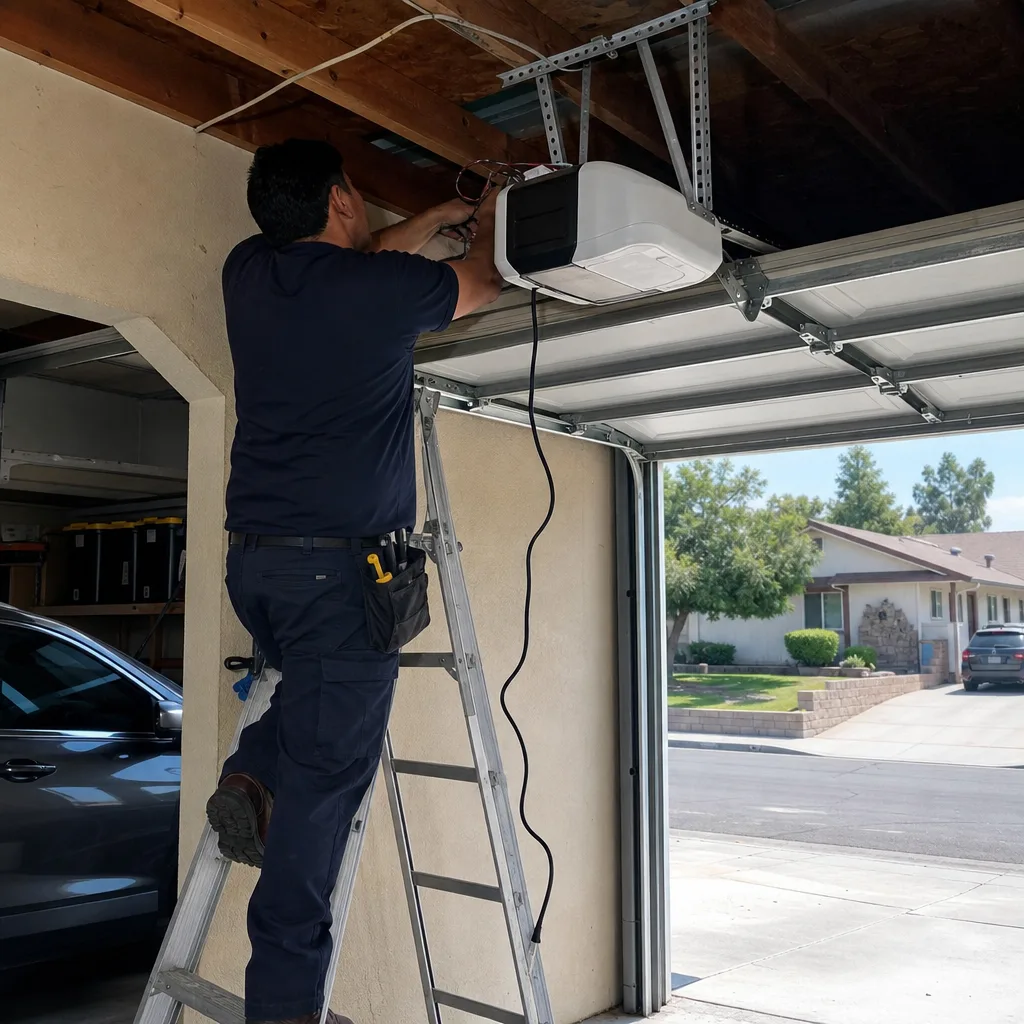
- Using WD-40 on anything. It’s the most common mistake we fix after the fact. WD-40 is a solvent and a water displacement spray, not a lubricant. It strips good lubrication off rollers and hinges, and in Long Beach’s humidity the parts corrode faster after WD-40 than if you’d done nothing.
- Ignoring the bottom seal because the door looks fine. The bottom seal is out of sight and out of mind until June Gloom, when you notice the garage feels damp or you see water staining along the floor near the door. By then the seal has been failing for months. Replace it as soon as it feels brittle, regardless of what month it is.
- Raising opener force settings after a Santa Ana wind event. A door that reverses mid-cycle during high wind doesn’t need more force; it needs the wind load to pass. If you raise the force to override the wind, you’ve made the opener slower to reverse in a genuine safety event.
- Lubricating the track. Many online guides recommend spraying track lubricant liberally onto the track rails. This is wrong. The track is a dry surface by design, and any lubricant on it becomes a gritty paste that accelerates roller wear. Only the rollers, hinges, and spring get lube.
- Skipping the February balance test because the door “has always been like that.” Doors don’t age gracefully; they age gradually, and you stop noticing the extra 10 pounds until the opener motor burns out. A door that’s been slowly getting heavier for two years is a door that’s about to need a new opener and new springs.
- Assuming a wood door in Long Beach can be refinished indefinitely. Wood doors in the Alamitos Heights and Belmont Heights neighborhoods are beautiful, but the combination of marine moisture and UV means the finish never fully cures in the same way it does inland. If the door is soft to a thumbnail press or the bottom panel is developing rot, refinishing won’t save it.
- Doing spring work from a YouTube tutorial. Torsion springs are under enough tension to cause a serious injury if released wrong, and every individual door’s spring is sized by wire diameter, coil count, and door weight. The savings from a DIY spring replacement never covers the risk profile. This is the one component where “hire it out” isn’t just advice; it’s a safety rule.
When to Call a Professional
Some garage door issues are visual checks you can do in a Saturday morning. Others are professional work, and knowing the line between them is what keeps a small issue from becoming a $400 emergency. Call a pro if you see any of these: a bottom panel rusting through at the seam, a cable that’s kinked or frayed anywhere along its length, a torsion spring that’s broken (you’ll hear it; it sounds like a gunshot), a door that’s heavy when you lift it manually, or an opener that reversed mid-cycle in calm weather. All of these involve tension-loaded components or weight-bearing failures that shouldn’t be handled without training and the right tools. Servo Garage Doors Long Beach offers free estimates in Long Beach – call (424) 688-6426 and we’ll give you a flat, written price before any work starts.
Frequently Asked Questions
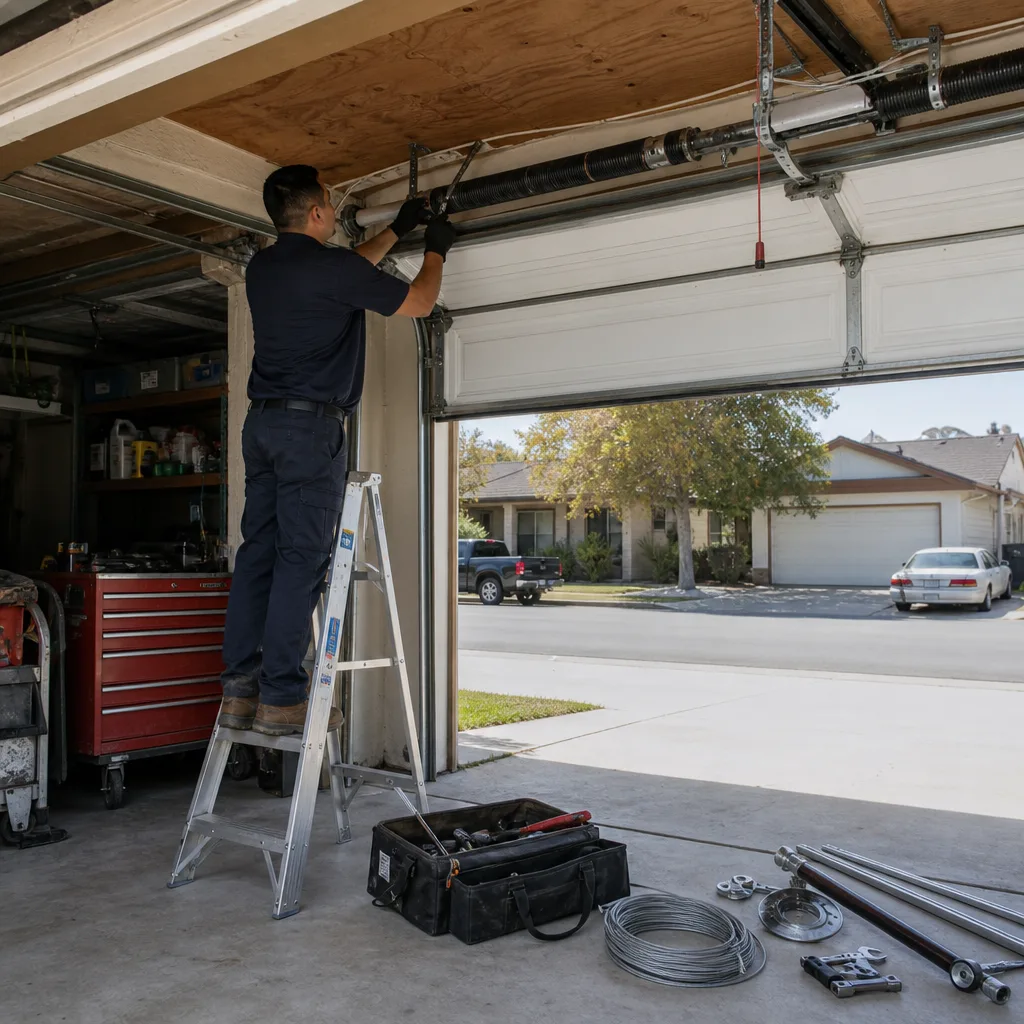
Twice a year: once in May before the marine layer season peaks, and once in October before the Santa Ana winds arrive. The May pass focuses on moisture-driven items (bottom seal, cable drums, hinge rust), and the October pass focuses on wind-driven items (track bolts, side seals, opener force settings). The February balance test is a standalone check that takes 90 seconds and doesn’t require any other work.
The bottom seal check during June Gloom, because Long Beach’s marine layer exposes your garage interior to sustained humidity for six to eight weeks every year, and a failed bottom seal is how that moisture gets in. This isn’t a check required in most of California, but it’s the single most common preventable issue we see in Long Beach.
A basic seasonal tune-up in Long Beach typically runs $89-$150 depending on the door type and what’s included, and that covers lubricating all moving parts, tightening hardware, testing balance, and verifying opener force settings. For detailed pricing factors, see our Garage Door Cost Breakdown: The Long Beach Homeowner’s Reference for 2026. If the tune-up uncovers a worn bottom seal or a dying roller, those are quoted as separate line items with a flat, written price before any work starts. Call (424) 688-6426 for an exact quote.
No. Written-price-first is the entire point of how a professional garage door company operates in Long Beach. A technician who quotes a “rough estimate” and then revises it after opening the door is not following a written-price standard. The price is agreed before work starts, and the scope is written down, not communicated verbally.
If the door’s bottom panel shows rust bleeding at the seam or the finish is cracked to the substrate, yes. A garage door is the single largest moving surface on your home, and it’s one of the first things a Long Beach buyer looks at during an inspection. A door with structural rust costs you real money in a sale; a tune-up and bottom seal replacement costs less than a cable bill and fixes most inspection flags.
In Long Beach, yes, specifically to the bottom seal, cable drum plating, and unsealed steel hardware. The marine layer isn’t just fog; it’s sustained 70-80% humidity against metal surfaces for six to eight weeks, and that’s a corrosion environment. Galvanized steel resists it for a few years, but the hardware on a 2018-era door in a Long Beach coastal neighborhood is already showing white rust at the bolt heads.
The Bottom Line
Long Beach has four seasons: marine layer, UV, Santa Ana, and the quiet settlement window, and each one stresses a different set of components in a sequence you can predict. The bottom seal and cable drums take the moisture hit in June. The panels absorb UV in August. The tracks and opener force settings take the wind load in October. The balance test in February catches spring fatigue before the heavy-use cycle begins. If you follow the protocol, you’ll catch most failures before they strand you outside your garage at 7 a.m. on a workday. Explore more guides & resources on our blog to keep your door running smoothly year-round. If you don’t, you’ll learn about it from a door that stopped opening three feet up. The choice is yours and the tests take less time than reading this guide.
Written by Marcus Deller, Owner at Servo Garage Doors Long Beach, serving Long Beach since 2015.