
Last updated September 19, 2026
Full 25-point door and opener safety check with every visit - springs, cables, rollers, tracks, and your LiftMaster or Chamberlain opener included
You get a price before we start. It does not change when the truck arrives.
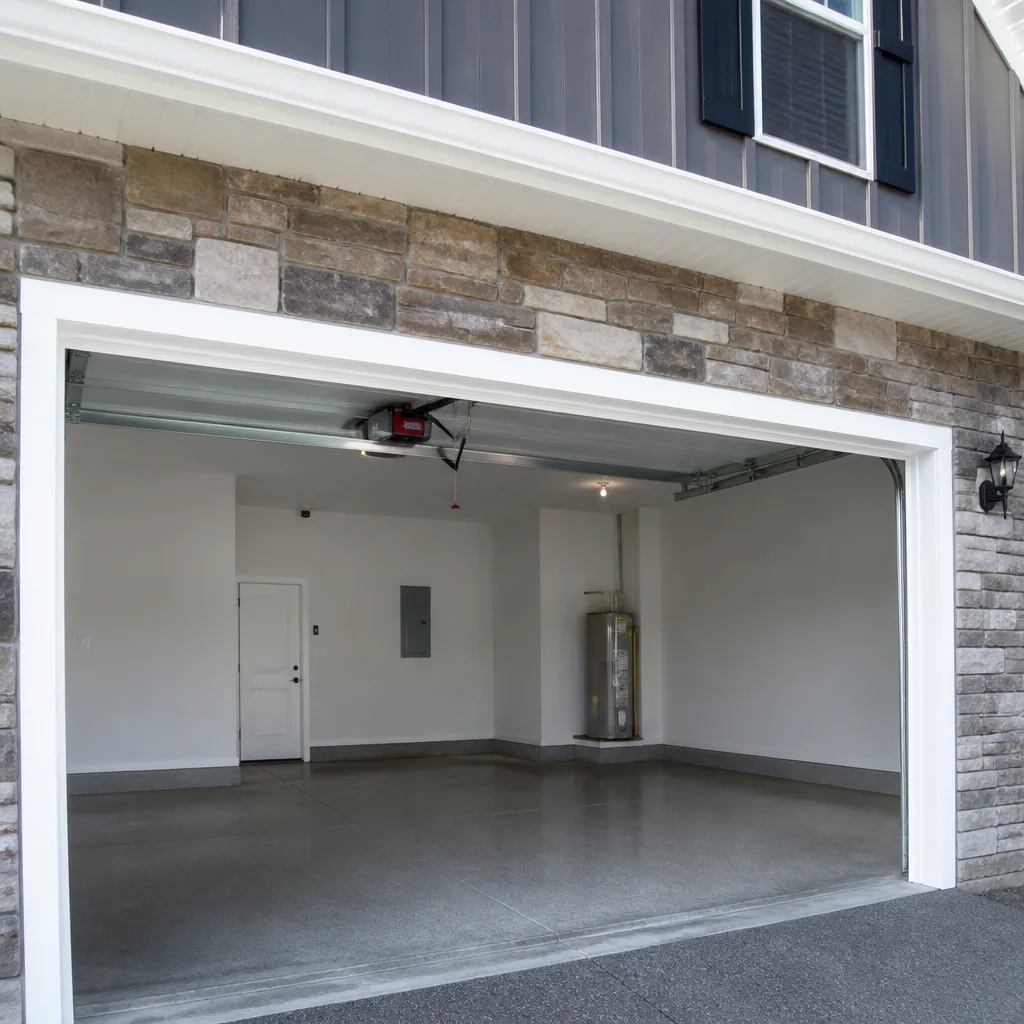
Chamberlain openers
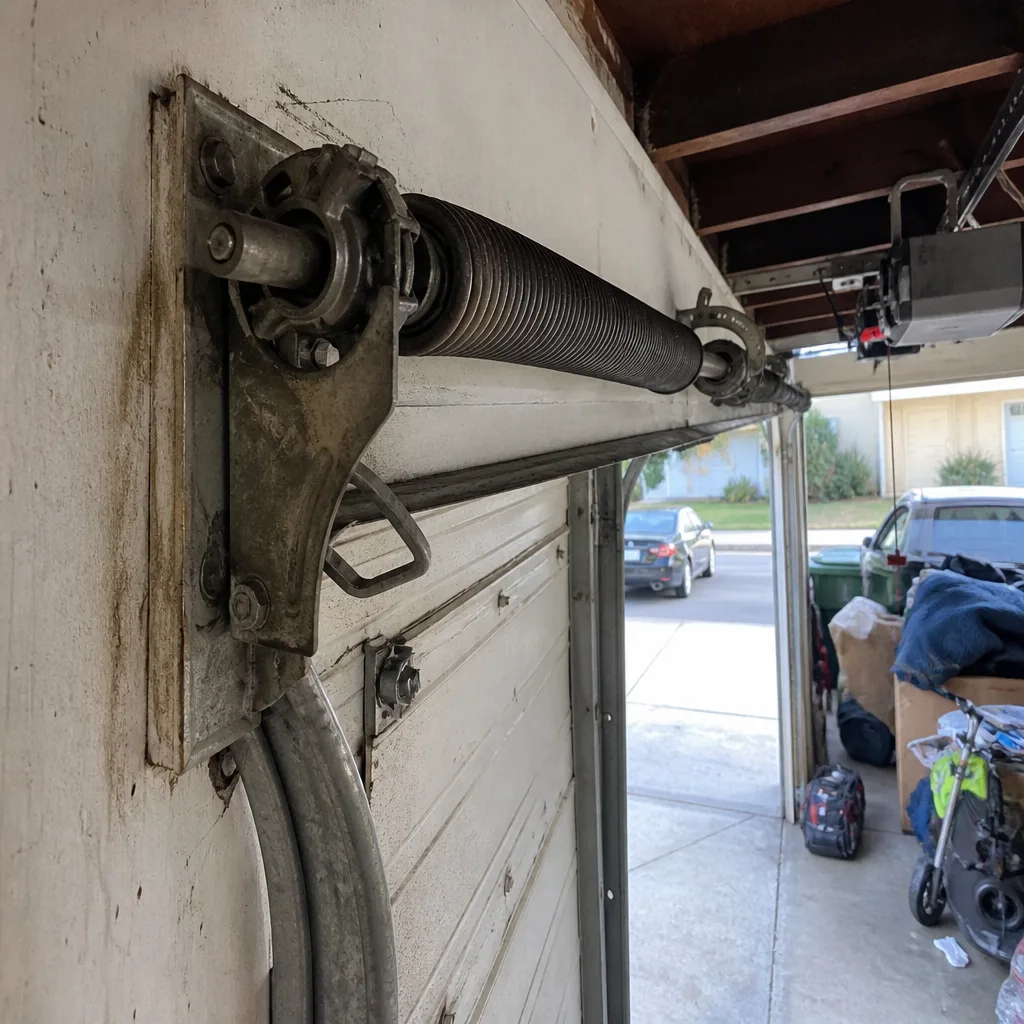 Before
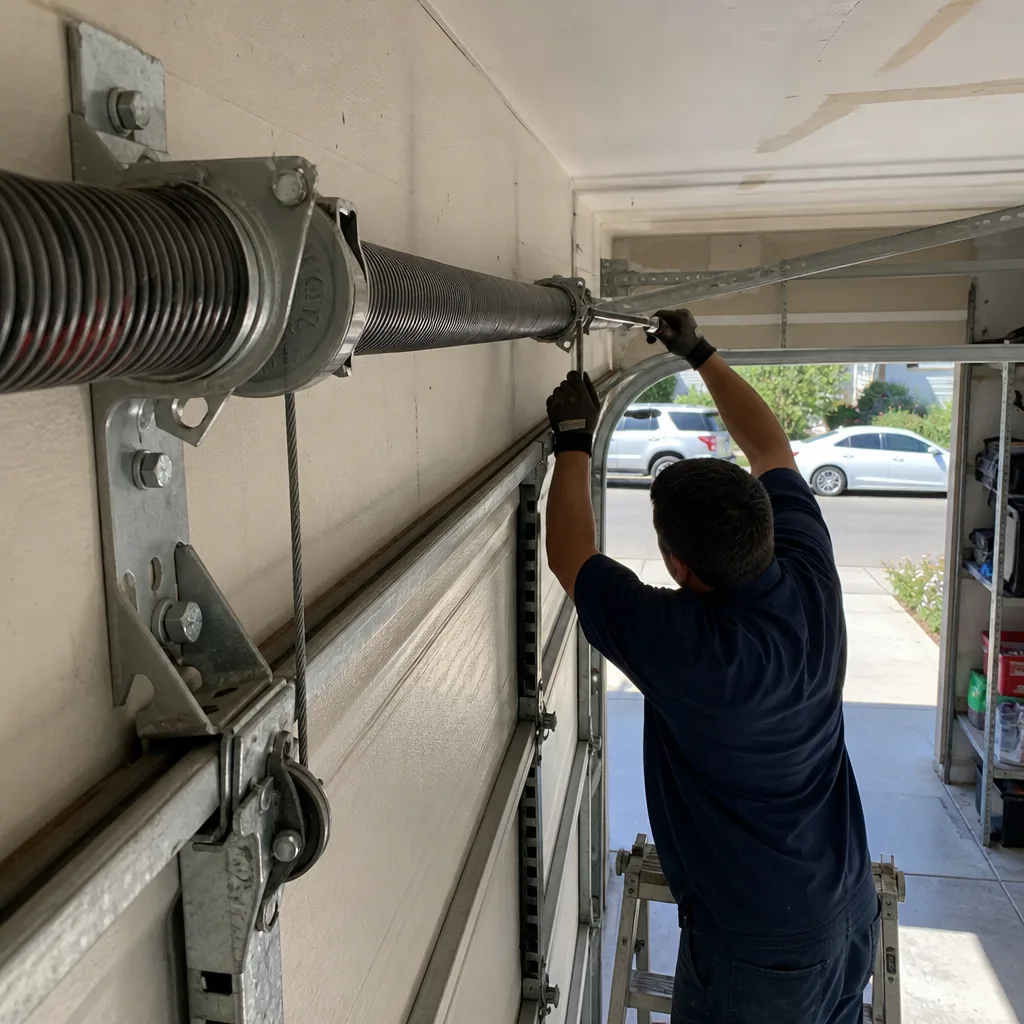 After
After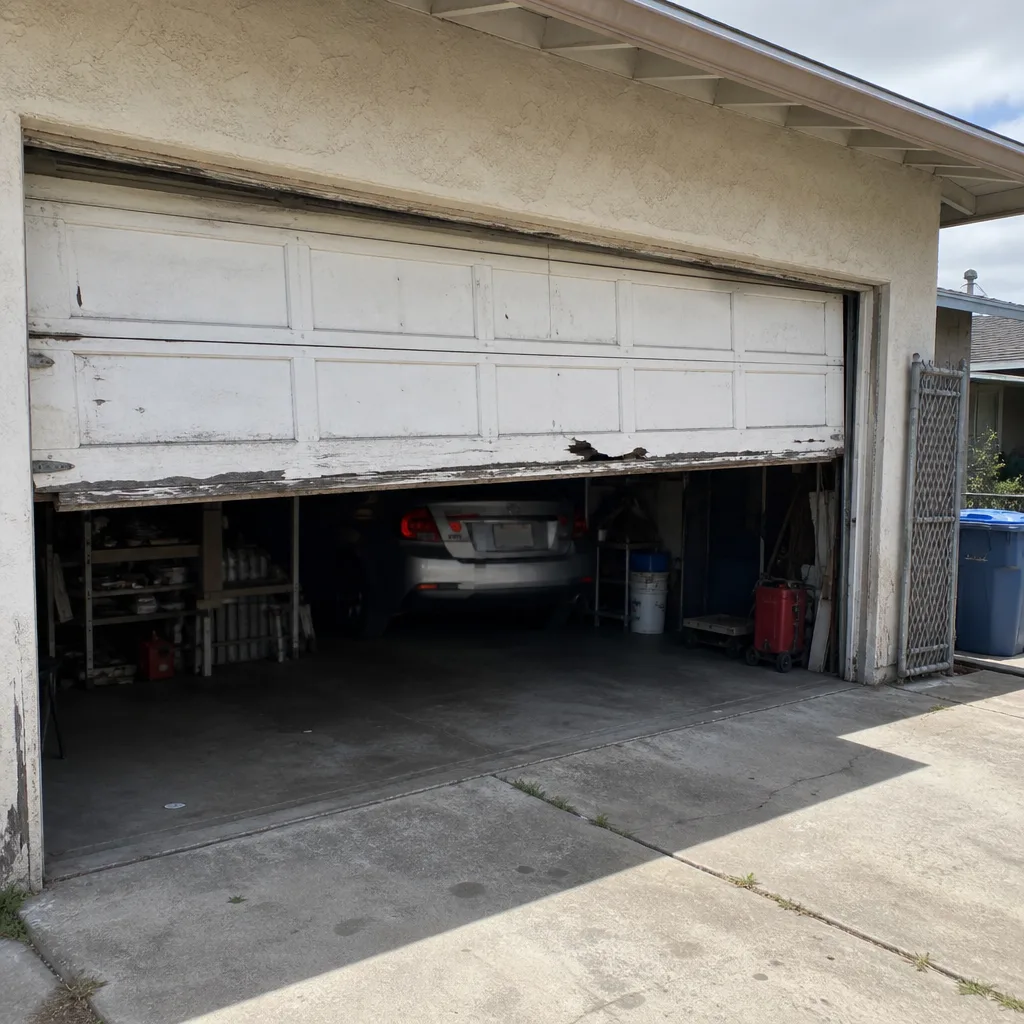 Before
 After
After Before
 After
AfterHow to Hire a Garage Door Contractor in Long Beach: A Step-by-Step Guide
California does not require garage door contractors to carry a license below $500 of work, and a meaningful portion of Long Beach technicians operate on exactly that legal grey area: verbal quotes, no permits pulled, no paper trail. Meanwhile, your garage door is the largest moving object in your home. When a torsion spring snaps in a 1920s bungalow in Belmont Heights or a trolley carriage binds on a two-car door in El Dorado Park, the difference between a $200 repair and a $1,800 replacement often comes down to whether the person holding the quote has any reason to show you the failed part. This guide covers the exact license to verify, the five questions that expose parts-swapping, how to read a warranty, and why written pricing before any work starts is the single strongest protection you have. For more, see our Complete Guide to Garage Door in Long Beach. Here is how to hire a garage door contractor in Long Beach without inheriting someone else’s urgency.
Quick Answer
To hire a garage door contractor in Long Beach, verify their C-61/D28 specialty license on the CSLB database, request a written itemized quote before any tool leaves the truck, ask to see photographic evidence of the failed component before approving a replacement, and read the warranty clause to confirm whether labor is actually covered. A contractor who pushes for same-day verbal approval without a written scope has structurally removed your ability to dispute the invoice. Servo Garage Doors Long Beach documents every job with a photo record and flat written pricing before work starts.
Table of Contents
- Step 1: Verify the C-61/D28 License in Under 60 Seconds
- Step 2: Get a Written, Itemized Quote Before Any Tool Leaves the Truck
- Step 3: Ask the Five Questions That Reveal Whether They’re Quoting the Failed Part or a Paycheck
- Step 4: Demand Photographic Evidence of the Failed Component Before Approving Work
- Step 5: Read the Warranty Clause Like a Contract, Not a Brochure
- Step 6: Control the Scope Before, During, and After the Job
- What the Paperwork Should Look Like When the Technician Leaves
- Red Flags in Long Beach Specifically
BeforeAfterStep 1: Verify the C-61/D28 License in Under 60 Seconds
California does not require a general contractor’s license for small home repairs. But garage door work above $500 in parts and labor triggers a C-61/D28 specialty classification, which covers door and lock work. In Long Beach, where a typical torsion spring replacement with parts runs between $280 and $450, many jobs fall under the threshold by themselves. The moment two springs need replacing or a motor is involved, that threshold is crossed, and the contractor must carry the license. Most homeowners never ask.
Here is the 60-second check:
- Go to cslb.ca.gov and click “Check a License.”
- Enter the contractor’s name or license number.
- Confirm the classification reads “C-61 / D28 – Doors and Locks.”
- Check the license status: Active, Expired, or Suspended.
- Check for workers’ compensation insurance coverage, which is listed on the same screen.
- Look at the “Business Information” tab for any administrative actions or complaints.
A contractor with an expired license, a different classification, or no listing at all is not necessarily a fraud. They may be legally operating below the threshold. But they have no documented accountability to any state body, and their insurance status is opaque. In Long Beach, a city with a dense mix of pre-war housing stock and newer builds in Bixby Knolls and Los Altos, the garage door itself differs wildly from house to house. A technician who handles a lightweight aluminum door in a 2018 Naples Island townhome may have no experience with the 200-pound solid wood doors common in California Heights. The license is the baseline. Experience with your specific door type is the second filter.
We answer this question on intake. Marcus Deller, owner at Servo Garage Doors Long Beach home, keeps the license number on the page, not buried in fine print. You should not have to ask twice. If the contractor hesitates when you request the number, that hesitation is information.
Step 2: Get a Written, Itemized Quote Before Any Tool Leaves the Truck
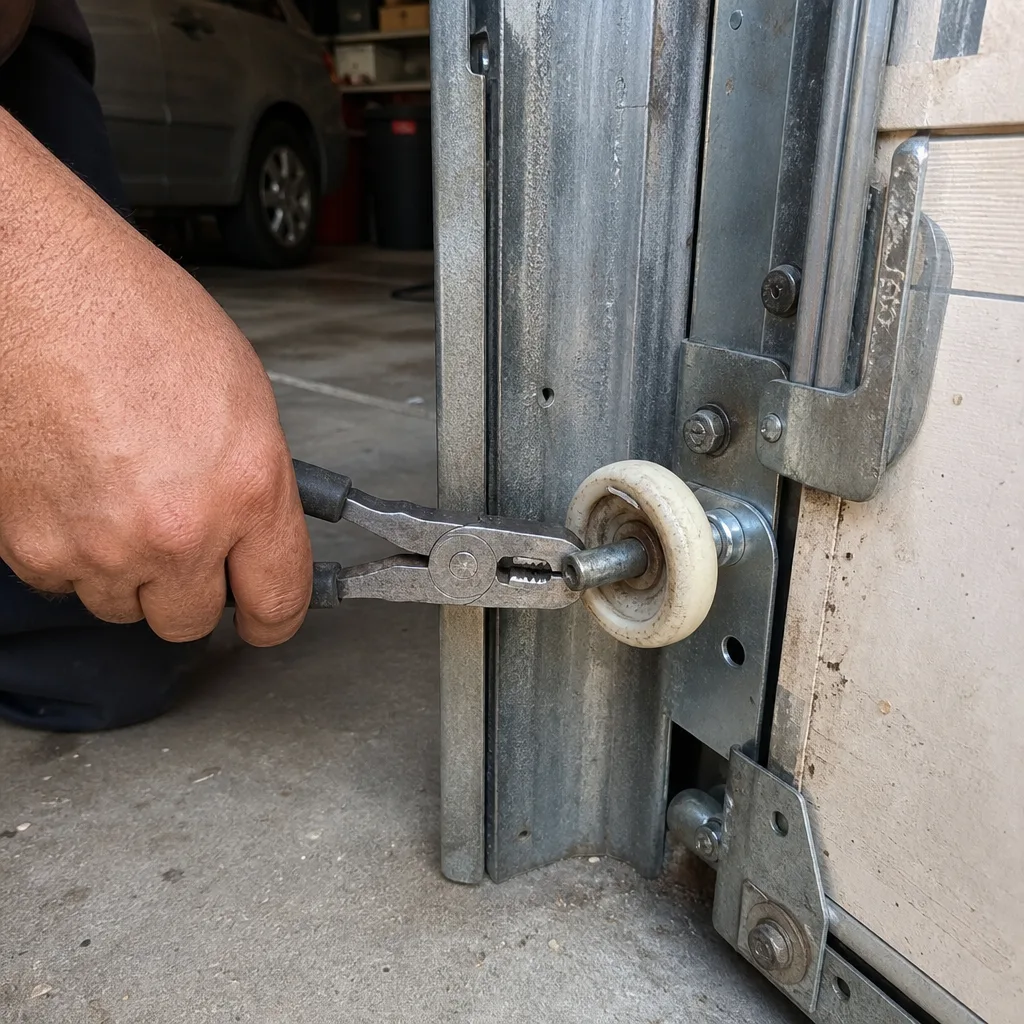
The most important protection in garage door contracting is not the license, the insurance, or the warranty. It is the moment at which the price becomes fixed. A verbal quote is not a quote. A verbal quote followed by work and an invoice is a blank check with your signature deferred. When a technician says “spring replacement will probably run you about three hundred,” that is not a number. That is an estimate expressed as a mood.
A written quote with a line-item scope does three things:
- It fixes the price. You know the number before any tool is removed from the truck. If the final invoice exceeds the written quote, you have a document to dispute from.
- It names the parts. A legitimate quote says “0.225x2x31 torsion spring, left and right wind.” A vague quote says “spring system replacement.” You cannot compare the second item across bids. You can compare the first.
- It defines done. The quote should specify the exact work: which springs, which cables, which brackets, whether the opener is touched, whether the door is rebalanced. Without a scope, “done” becomes a negotiation after the fact.
In Long Beach, we regularly hear about technicians who arrive at a home in the Wrigley neighborhood, take a look, and quote a number while holding the broken spring in one hand. The homeowner has 30 seconds to decide. This is leverage, not service. A written quote flips the leverage back to the person paying the invoice. When the price and scope are committed to paper before any work begins, the contractor’s incentive shifts from “find the most profitable path” to “do the job as specified.”
Servo Garage Doors operates by Clause 1 of The Haven Standard: a flat written price and written scope are delivered before any work starts, on every job, every time. We do not offer verbal quotes. We do not quote “probably” or “around” or “should be.” We write the number down and stand by it. A garage door contractor who refuses to put a price in writing before starting work is not being casual. They are being strategic.
Step 3: Ask the Five Questions That Reveal Whether They’re Quoting the Failed Part or a Paycheck
The garage door industry contains a consistent failure mode: a technician arrives to diagnose a $45 limit switch or a $60 logic board issue and instead quotes a full opener replacement at $600. The part might be repairable. The technician might know it. But replacing the whole opener pays more than replacing the switch, and the homeowner cannot see inside the unit to verify. This dynamic is not universal, but it is common enough that you should enter every service call with a set of questions designed to expose it.
Ask these five questions, in order:
- “Can you show me the failed part and tell me exactly what measured wrong?” A legitimate technician will point to the torsion spring, the broken cable strand, the worn limit switch, the stripped trolley carriage. A technician who speaks only in symptoms (“your door’s just old” or “these openers are known for this”) is avoiding the specificity that would prove their diagnosis.
- “Is this part repairable, and what would a repair cost?” The answer to a broken component is sometimes a replacement, but the homeowner should hear the repair option priced out. If the technician cannot or will not quote a repair path, that is data. Sometimes a replacement is genuinely the right call. But you should hear the math.
- “What brands do you typically stock parts for?” A technician who services all eight major brands (LiftMaster, Chamberlain, Genie, Clopay, Amarr, Wayne Dalton, Craftsman, Raynor) will stock cross-compatible parts. A technician who only carries one brand’s system is, in practice, selling one brand’s system. If you own a Genie opener and the tech only carries Chamberlain parts, you are not getting a diagnosis. You are getting a conversion funnel.
- “What will this cost if the problem is what you think it is, and what could change that number?” This separates the fixed-quote contractor from the bait-quote contractor. A contractor with real pricing can give you a number with confidence. A contractor who hedges every variable is planning to discover variables later. The answer should come from a priced menu, not a mental model of what the customer will tolerate.
- “If I approve a repair and you find something else wrong, what happens?” The honest answer is that any additional work gets quoted in writing before it proceeds. The concerning answer is “we’ll take care of it and adjust the final invoice.” The final invoice should never be an adjustment. It should be the sum of the written quotes you approved.
We see this play out across Long Beach consistently: in Eastside neighborhoods where the housing stock is older and the door hardware is original, the “replace the whole door” pitch comes disproportionately often. A 1960s garage door in the El Dorado Park Estates area may indeed be at end of life. But the decision should be evidence-based, not fatigue-based. The photo record matters here. If the tech cannot show you the failed component, the diagnosis is an assertion, not a finding.
Step 4: Demand Photographic Evidence of the Failed Component Before Approving Work
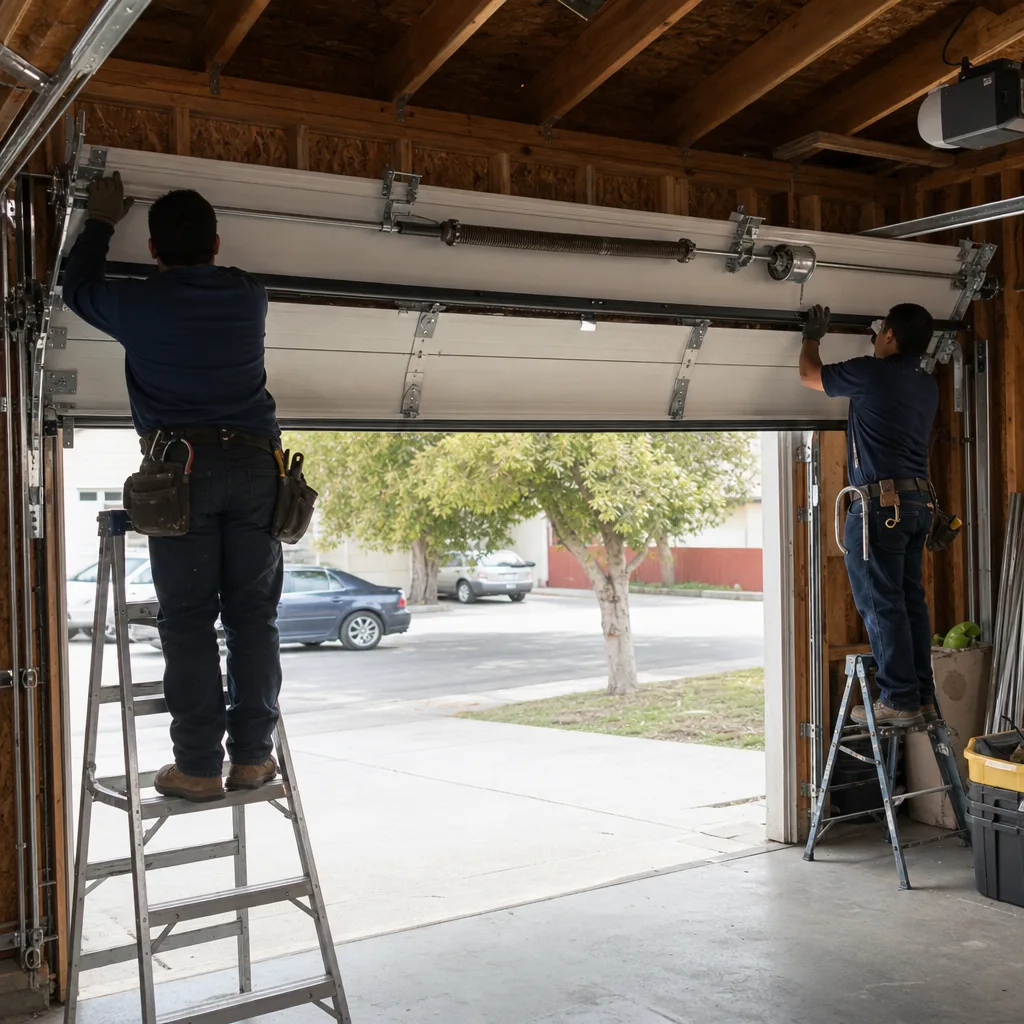
Imagine you take your car to a mechanic who tells you the transmission failed, but the hood stays closed the entire time. You are asked to approve a $3,000 replacement based on verbal representation. No sensible person does this. Yet homeowners approve garage door repairs the same way every week in Long Beach.
The failed part is the evidence. It was present before the technician arrived. It will be discarded after the repair. The only window in which you can verify the diagnosis is before the work starts. A contractor who is committed to accountability will photograph the failed torsion spring, the frayed cable, the stripped pulley, the cracked hinge, the logic board with the burned-out capacitor, and show you the image on the spot. Better, they will deliver it to you as part of the job record.
What documented photo evidence should look like:
- The part is identifiable. You can see the break in the spring coil, the missing teeth on the gear, the burn mark on the board.
- The photo is dated and tied to your job. It is not a generic photo of “a bad spring” from the internet. It is your spring.
- You receive the photo. The evidence arrives in the job summary or follow-up documentation. It is not shown briefly on a phone screen and then carried off.
- The quote is tied to the photo. The line item for “torsion spring replacement” corresponds to the image showing the torsion spring breach.
- A copy of the original written quote. The one you approved. It should match the final invoice line for line.
- The final invoice. Equal to the sum of the approved quote items. No line items you did not see in writing.
- A written warranty statement. Identifying what is covered, for how long, and whether labor is included. Not a verbal “you’re covered for life.”
- The photo record. Before photos of the failed component, after photos of the completed work, delivered as part of the job summary. This is Clause 4 in action.
- The technician’s name and contact. If an issue comes up in year two, you should know who did the work and how to reach them.
- The technician does not know the neighborhood details. A local technician knows that Belmont Shore homes deal with salt air on hardware and that older North Long Beach track systems often require shimming due to settling. A rotating corporate tech does not. This matters because the fix that works on a newer Bixby Knolls tract home is not the same fix that works on a 1930s Willow Street cottage.
- The quote is timed, not written. “This price is good for today only.” There is no reason for a garage door repair quote to expire at midnight. Prices on springs and openers do not fluctuate intraday. A timed quote is a pressure tactic, not a market signal.
- The company has no Long Beach address. A PO box in Gardena, a call center in Phoenix, or no physical address at all. Ask where the trucks are dispatched from. If the answer is evasive, you are dealing with an operation that can vanish without consequence.
- They will not provide the license number upfront. A legitimate operator prints it on the estimate. A contractor who consults the license as if for the first time when you ask is either unlicensed or surprised that anyone checked.
- They push the full door replacement without examining the hardware. A new door is a bigger invoice. Sometimes it is the right recommendation. But if the recommendation lands within the first 15 minutes and is not accompanied by a specific description of what is wrong with your existing door, you are hearing a sales script, not a diagnosis.
- The warranty is verbal only. “If anything goes wrong, just call me.” This is a promise with a shelf life measured in weeks. Written warranties are enforceable. Verbal warranties are faith.
- They cannot or will not provide references from your specific area of Long Beach. A contractor who has worked in the city should be able to point to recent jobs in the same general geography. No references plus no local address plus no written quote is a pattern, not a coincidence.
At Servo Garage Doors Long Beach, this is not an optional feature. It is Clause 4 of The Haven Standard, and it traces back to the founding rule from 2015: the customer sees the failed part before anyone quotes a replacement. Every visit includes a documented photo record of what was found and what was done. Marcus Deller built Garage Door Repair in Long Beach on the premise that a paper trail outperforms a handshake. A contractor who offers no photo evidence has not necessarily done anything wrong. But their process does not allow you to know one way or the other, and that asymmetry is the entire problem.
Step 5: Read the Warranty Clause Like a Contract, Not a Brochure
Most garage door warranties are written to sound broader than they are. The word “warranty” appears in marketing copy, in the technician’s pitch, and in the fine print, each time meaning something different. Here is how to read the three warranty types without getting misled:
The manufacturer pass-through warranty. When a contractor installs a Chamberlain opener, a Genie belt drive, or a Clopay door, the manufacturer provides a warranty on the product itself. Chamberlain, for example, typically offers a limited lifetime motor warranty on certain models. This costs the contractor nothing. It is simply a hand-off: the manufacturer warrants the part, and the contractor passes the claim to the manufacturer. If your opener’s logic board fails 18 months later, the manufacturer may replace the board, but you will pay for labor, or the contractor will charge a service call. A pass-through warranty is real but limited, and its existence is not evidence of contractor accountability. It is evidence that the manufacturer stands behind the product.
The parts warranty from the contractor. This is when the contractor warrants the specific parts they supplied and installed. “We warrant the torsion springs we installed for 5 years.” If the spring fails in year 4, the contractor replaces the spring. The question is labor. Most parts warranties do not include labor. You get a free spring and a paid installation. Ask directly: “Does the parts warranty include labor, or only the part?”
The labor warranty from the contractor. This is the important one. It means the contractor stands behind the workmanship, not just the manufactured item. If the door was improperly balanced and the new spring fatigues early, the labor warranty covers redoing the work. A contractor who offers a strong labor warranty is confident their technicians do the job correctly. A contractor who only offers manufacturer pass-through coverage is transferring all risk to the homeowner and the factory.
In Long Beach, salt air is a real variable. Homes in Alamitos Beach, Belmont Shore, Naples, and along the Peninsula deal with marine corrosion that accelerates spring fatigue and cable wear. A parts warranty written for inland climates may not perform the same way a mile from the Pacific. Ask whether the warranty term accounts for coastal exposure, and get the answer in writing. If the contractor says “the warranty is standard,” that means it was not written for your environment.
And of course, the entire warranty is toothless if the company vanishes. This is where the license check from Step 1 links back: a company with an active C-61/D28 license, a physical service area, and a verifiable track record is statistically more likely to still exist when the warranty is invoked. A transient operator who came through Long Beach on a seasonal work route will not be answering the phone.
Step 6: Control the Scope Before, During, and After the Job
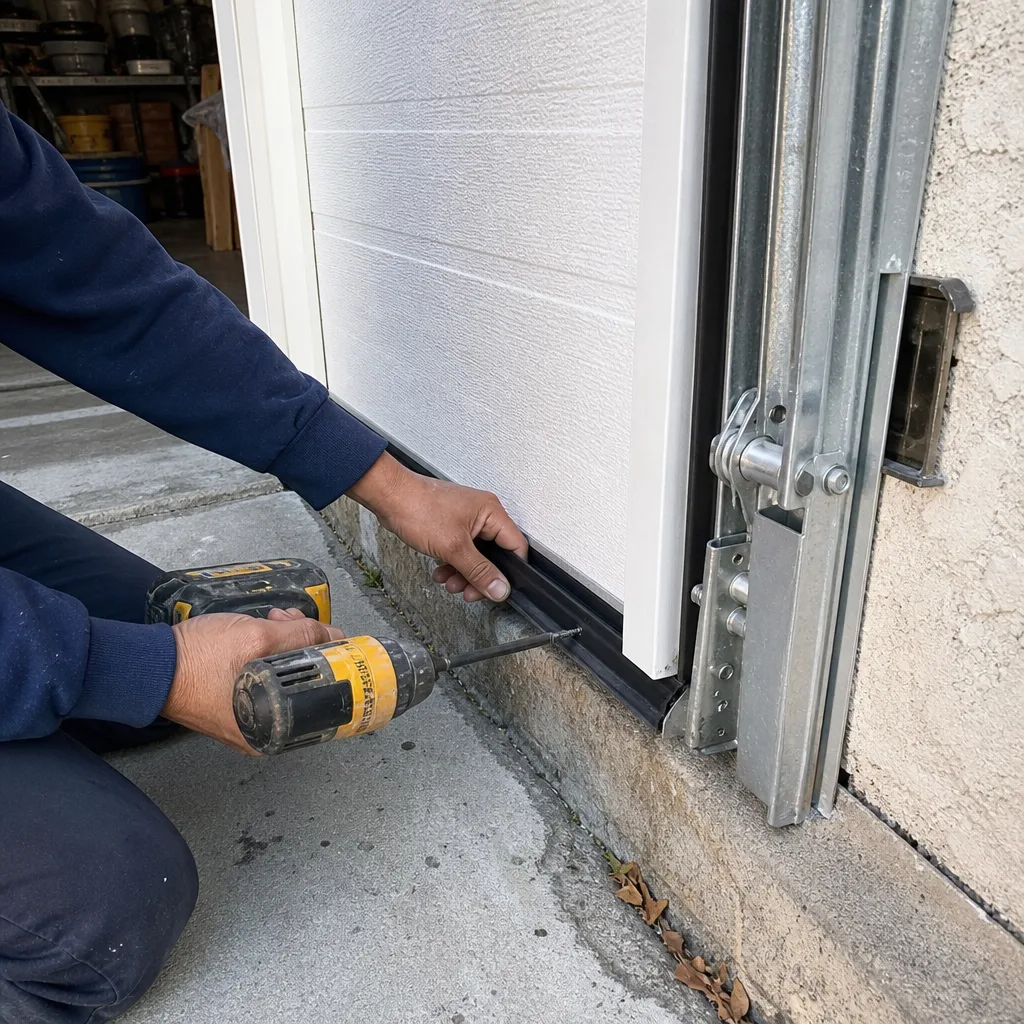
Scope creep in garage door work is the silent version of the hard upsell. The original quote covers a broken spring. The technician then notices the cables are “worn” and the drums “could fail soon.” By the time the truck leaves, a $320 spring replacement has become an $850 “full hardware refresh” that was never quoted in writing and never approved.
Here is how to handle scope: the moment anything is added to the job, it gets added to the written quote. No exceptions. If the tech says the cables need replacement, that is a new line item with a new price. It is presented in writing. You approve it or you don’t. The final invoice equals the sum of the line items you approved, exactly.
The alternative is what we call invoice drift. The technician finds “additional necessary work” during the job, performs it without a written quote, and the final invoice lands 40% above the original number. In some cases the added work was genuinely necessary. In many cases, it wasn’t. The point is that you should not have to guess. The written quote was designed to remove guessing.
For garage door installation, the same discipline applies with more urgency. A Garage Door Installation in Long Beach job involves measurement, order, removal, and reinstallation. The quote should itemize the door model, the size, the insulation spec, the track system, the hardware, the haul-away fee, and the labor. If the installation quote is three lines and a total, the scope is not controlled. It is implied. Implied scope is how you end up paying extra for the disposal of the old door or for hardware that was supposedly included.
Long Beach’s housing mix also means scope varies by job. A detached single-family home in Los Altos with a standard 7-foot door is a different job than a townhome in the Promenade with HOA-specific door requirements, or a 1920s craftsman in Rose Park with a non-standard rough opening that needs a custom cut. The wider the variance, the more important the written scope.
What the Paperwork Should Look Like When the Technician Leaves
Hiring a contractor is not complete until you see the leaving paperwork. If the job ends with a handshake and a “thanks, invoice will be emailed later,” you have skipped a step. The leaving documentation is the evidence that the job was done as quoted and that your warranty exists outside the technician’s memory.
Here is what a complete job record includes at Garage Door Opener Repair & Installation in Long Beach with Servo, and what yours should include from any contractor:
A contractor who delivers all five of these has handed you a paper trail that survives any future dispute. A contractor who delivers none of them has left you with nothing but a memory and a credit card charge. The paper trail is not bureaucratic overhead. It is the entire point of hiring an accountable professional.
Red Flags in Long Beach Specifically
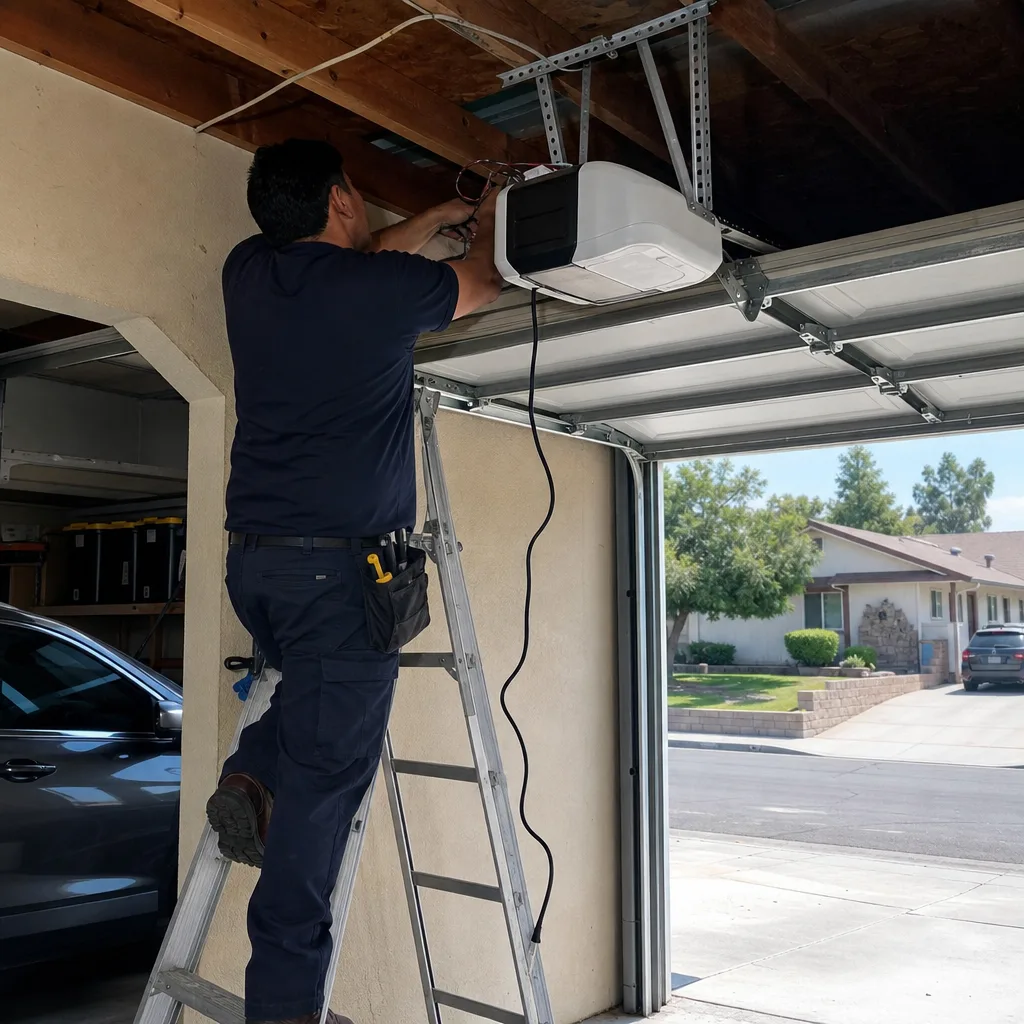
Long Beach is a city with 466,000 people, seven ZIP codes spanning coastal and inland neighborhoods, and a garage door market that runs from high-end custom doors in Naples to budget replacements in North Long Beach. The city’s size creates a specific pattern: national franchise operations with rotating technicians who do not know the local stock, and one-truck operators who work the same ten neighborhoods until they relocate. Neither offers the documentation standard the homeowner deserves.
Here are the red flags to watch for in the Long Beach market specifically:
One more Long Beach-specific note: the city’s coastal corridor is where we see the highest concentration of after-the-fact invoice disputes. A homeowner in Naples or Belmont Shore receives a verbal estimate, approves the work, and then receives an invoice 50% higher. The distance between estimate and invoice is where the leverage goes to die. The shoreline is beautiful. The contracting landscape is not an exception to the rule.
Common Mistakes to Avoid
- Approving work from a verbal quote. Without a written number, you have no dispute anchor. The invoice becomes whatever the contractor decides it is.
- Skipping the license check because the technician “seemed trustworthy.” Trustworthiness is not a classification. The CSLB database check takes 60 seconds and returns a yes or no that no amount of personality can override.
- Accepting “the opener is just old” as a diagnosis. Old is not a failure mode. A diagnosis names the part and the measurement: the logic board capacitor is blown, the limit switch contacts are worn, the trolley carriage is binding. Words like “old” and “worn out” are placeholders for a diagnosis that was never done.
- Hiring based on the lowest bid without comparing scope. A $250 spring replacement with no written scope and no photo record is not cheaper. It is a smaller number attached to a bigger gamble.
- Not checking whether the warranty covers labor. A manufacturer warranty on a new Clopay door is not the same as a contractor labor warranty. One covers the product. The other covers the workmanship. You may need both.
- Letting the first available technician handle a spring replacement without asking about the spring specs. Torsion springs are matched to door weight and cycle life. A generic spring installation leads to a door that is misbalanced and springs that fatigue early. The right spring is a specification, not a guess.
- Ignoring the coastal factor in Long Beach. Salt air on the south-facing garages in Belmont Shore and the Peninsula accelerates corrosion on hardware. A contractor who does not account for this is selling you inland parts for a coastal problem.
When to Call a Professional
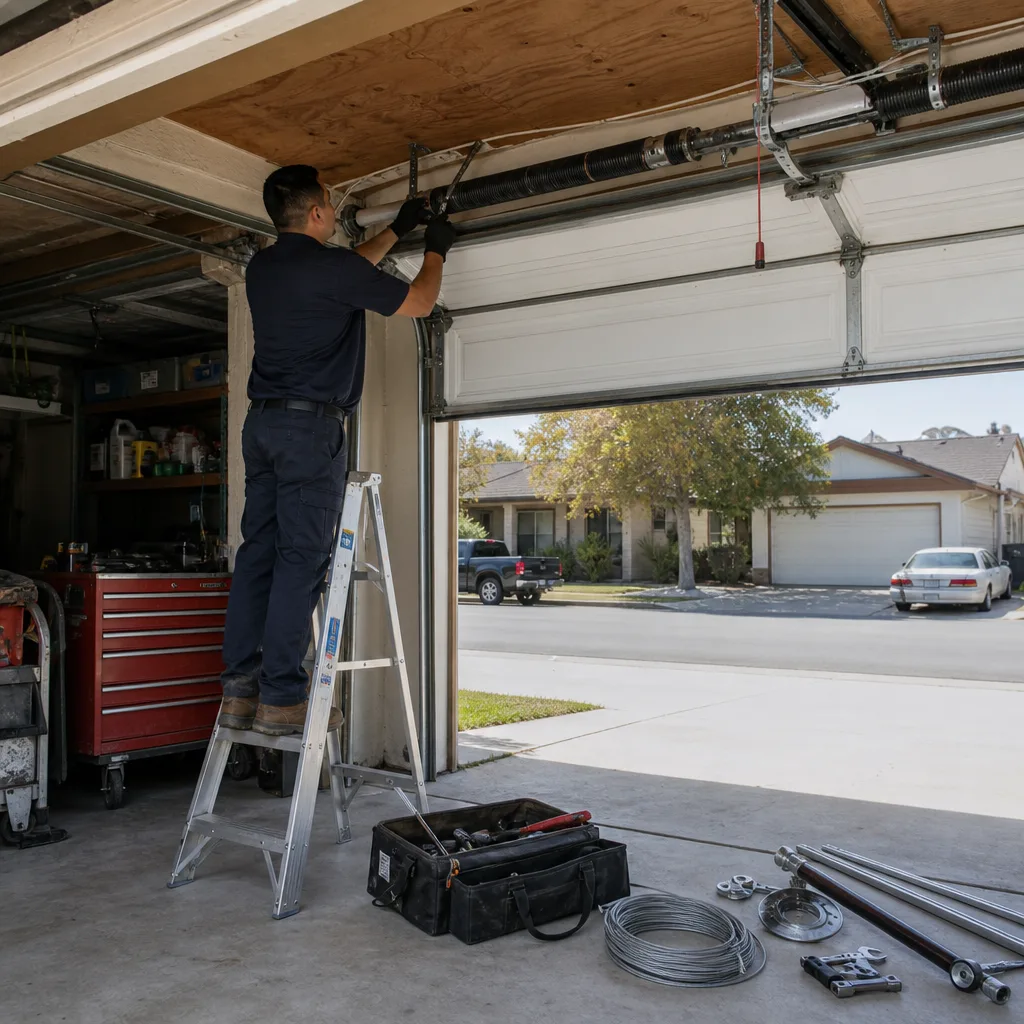
Garage door work involves a loaded torsion spring system that stores enough energy to cause serious injury when mishandled. Never attempt to remove, adjust, or reset a torsion spring yourself. If your door is unbalanced, making a grinding noise, or opening unevenly, the springs, cables, and drums are under tension even when the door is down. Our technicians are background-checked, uniformed, and trained for the specific hazard profile of a garage door system. If your opener fails and you are not certain whether the issue is the logic board, the limit switch, or the motor, call someone who can diagnose from evidence rather than guesswork. Servo Garage Doors Long Beach offers free estimates in Long Beach. Call (424) 688-6426.
Frequently Asked Questions
Check the Contractors State License Board database at cslb.ca.gov using the contractor’s name or license number. For garage door work above $500, the license should classify as C-61/D28, Doors and Locks. If the contractor’s license is active and carries the correct classification, they are legally permitted to do the work.
A proper quote is a written, itemized document that identifies the failed part, the specific replacement part, and the labor in separate line items. It should also state the total price and confirm that the quoted number will not change without written approval. A verbal number is not a quote.
In our Long Beach experience, a single torsion spring replacement typically runs between $280 and $450 for parts and labor, while a two-spring replacement (recommended for balanced wear) ranges from $480 to $700. Salt-air corrosion in coastal neighborhoods like Belmont Shore can accelerate spring fatigue and slightly push parts cost. Call (424) 688-6426 for an exact quote in writing before any work starts.
Yes. Servo Garage Doors Long Beach offers a free second opinion on any written estimate from another company. Bring the paperwork. We’ll review the diagnosis and the price without obligation, so you can compare apples to apples.
A straightforward spring replacement or opener logic board swap typically takes 60 to 90 minutes from arrival to completed photo record. Full door replacements are measured and scheduled, with installation occurring on a return visit. Any contractor promising same-day installation on a new custom door is likely quoting stock inventory or setting an unrealistic expectation.
Not with a written quote. The price and scope are agreed before work begins, and any additional work discovered during the job must be quoted in writing and approved separately. If a contractor tells you the number is “probably” right but could move, you do not have a quote.
The Bottom Line
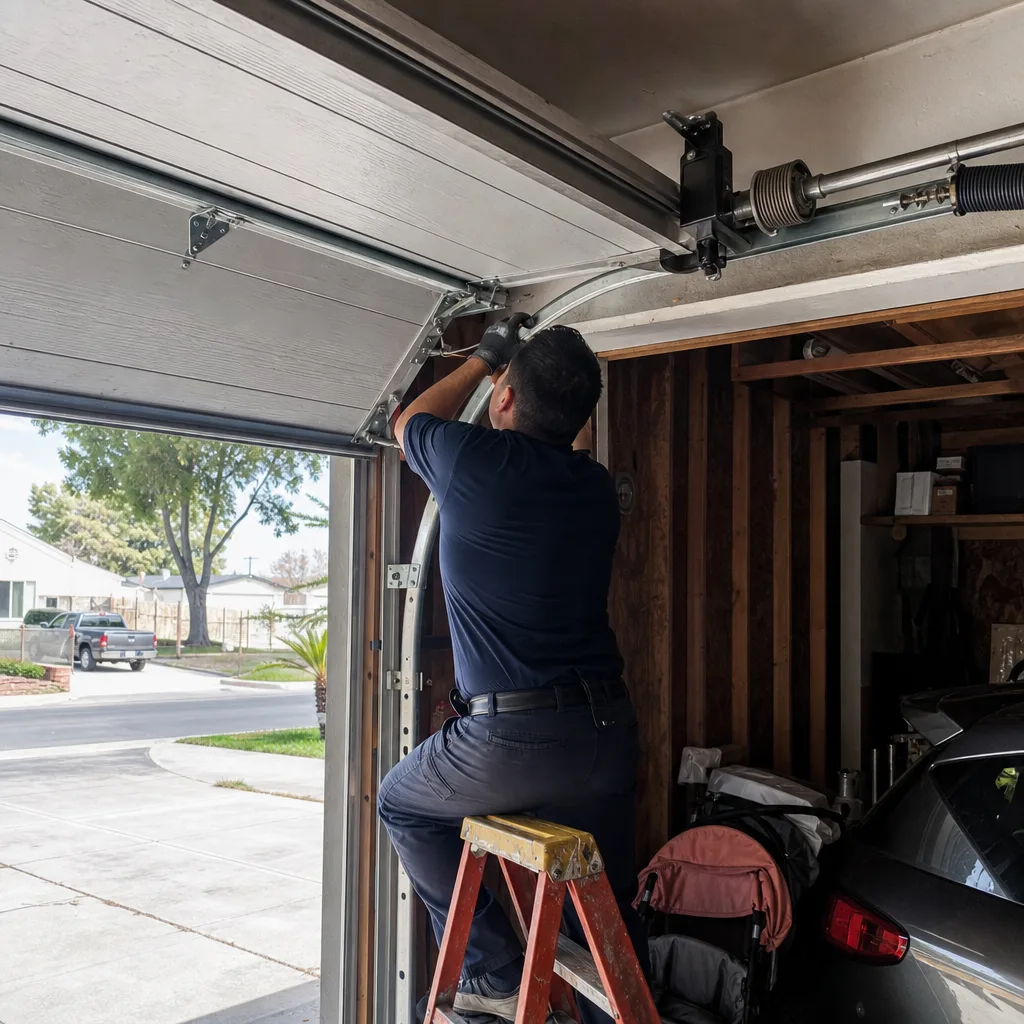
Hiring a garage door contractor in Long Beach comes down to one question: does the contractor operate with the documentation that makes accountability possible? The C-61/D28 license check confirms they exist in the eyes of the state. The written itemized quote confirms the price before work starts. The photo record of the failed component confirms the diagnosis. The written warranty confirms the obligation survives after the truck leaves. Most homeowners skip at least two of these steps and then wonder why the invoice arrived higher than the estimate. Do not be most homeowners. Call (424) 688-6426 for a free estimate and experience the difference a paper trail makes.
Written by Marcus Deller, Owner at Servo Garage Doors Long Beach, serving Long Beach since 2015.