
Last updated September 19, 2026
Full 25-point door and opener safety check with every visit - springs, cables, rollers, tracks, and your LiftMaster or Chamberlain opener included
You get a price before we start. It does not change when the truck arrives.
Chamberlain openers
 Before
 After
After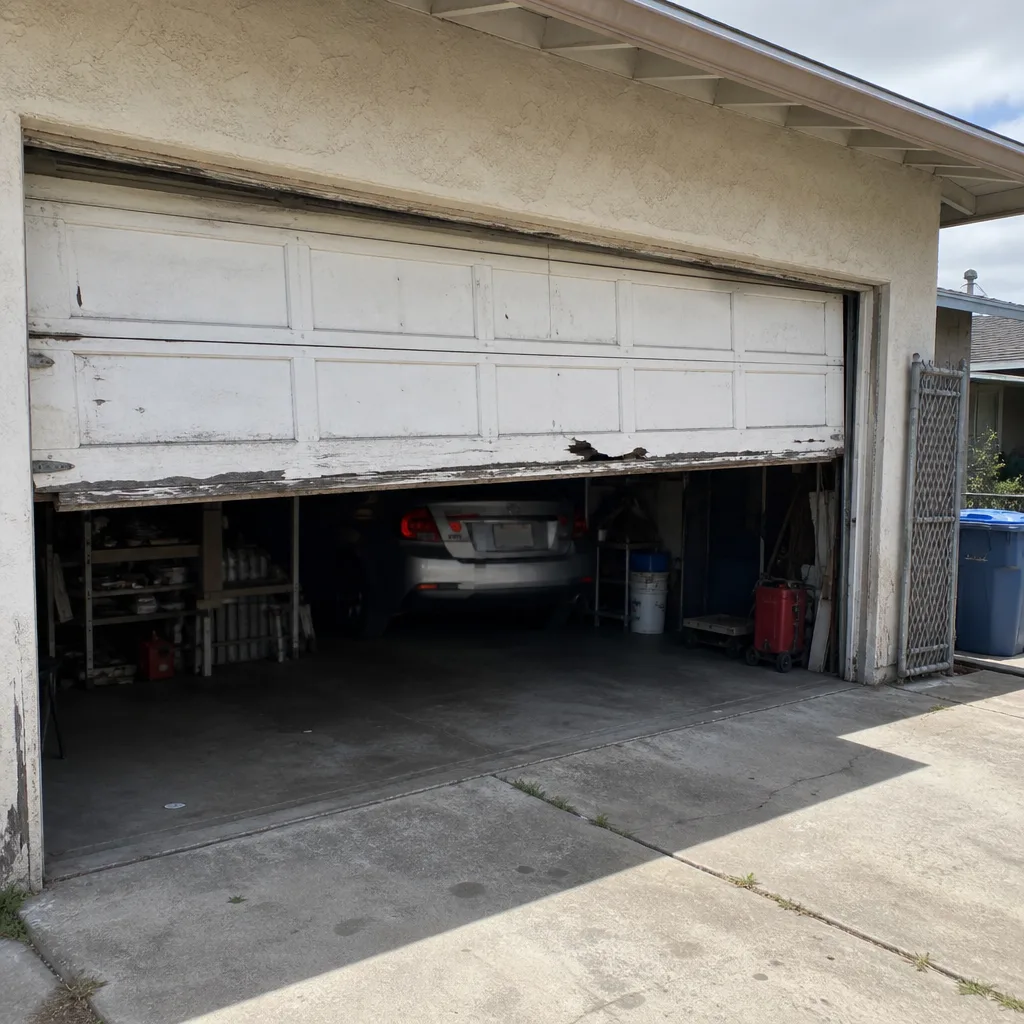 Before
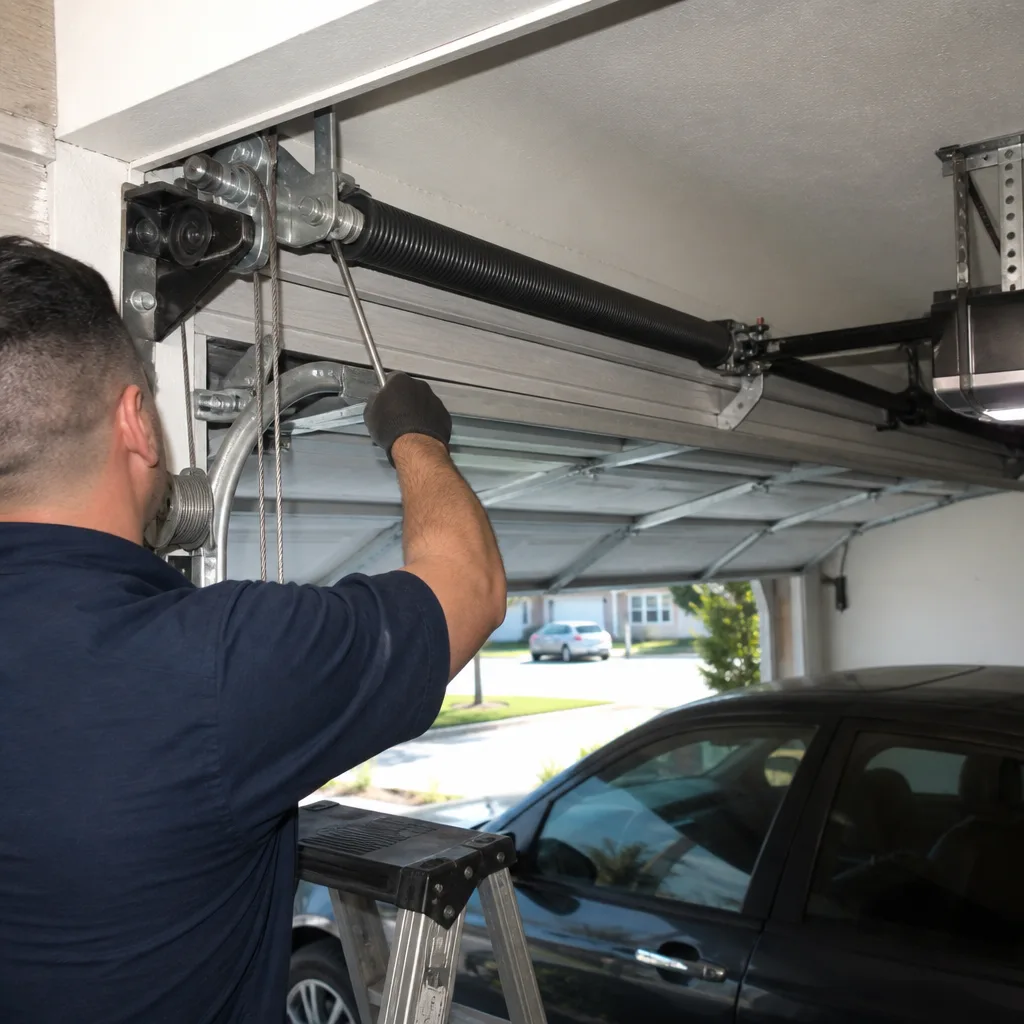 After
After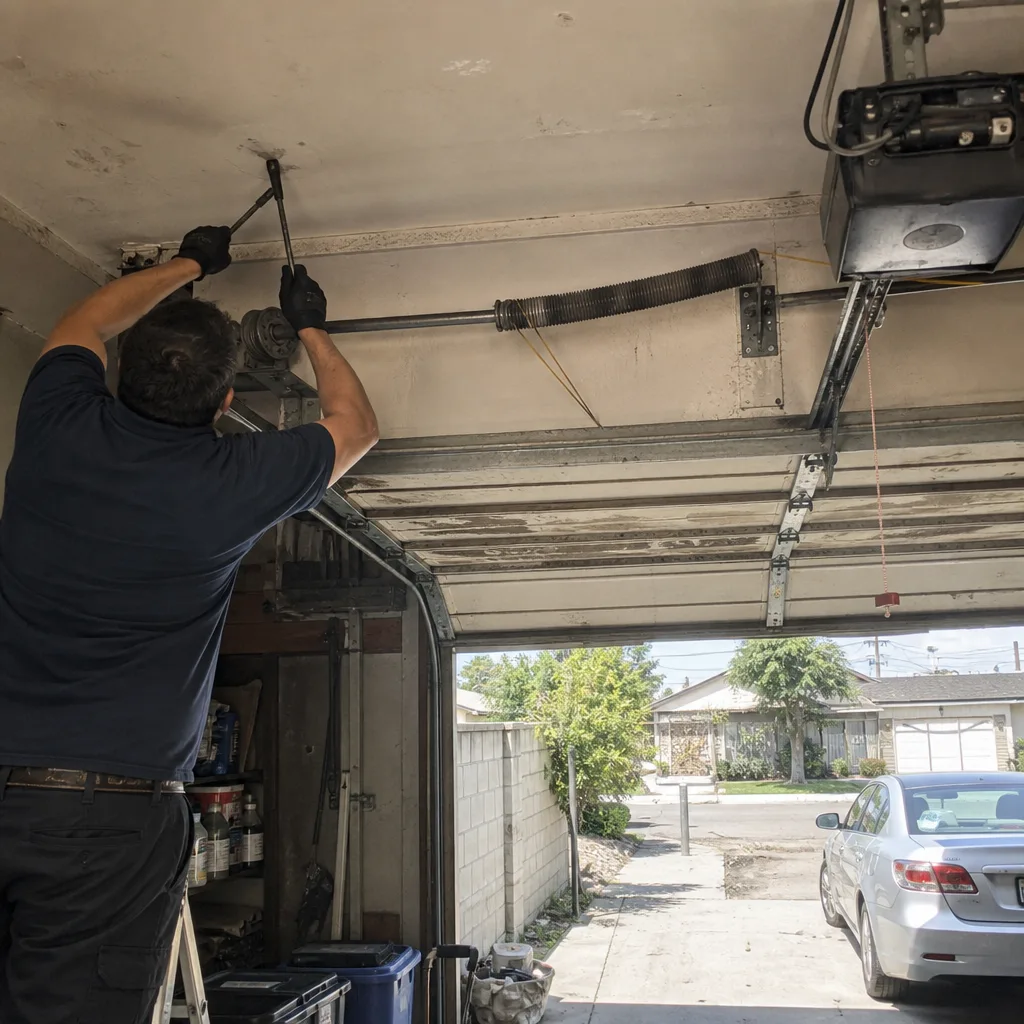 Before
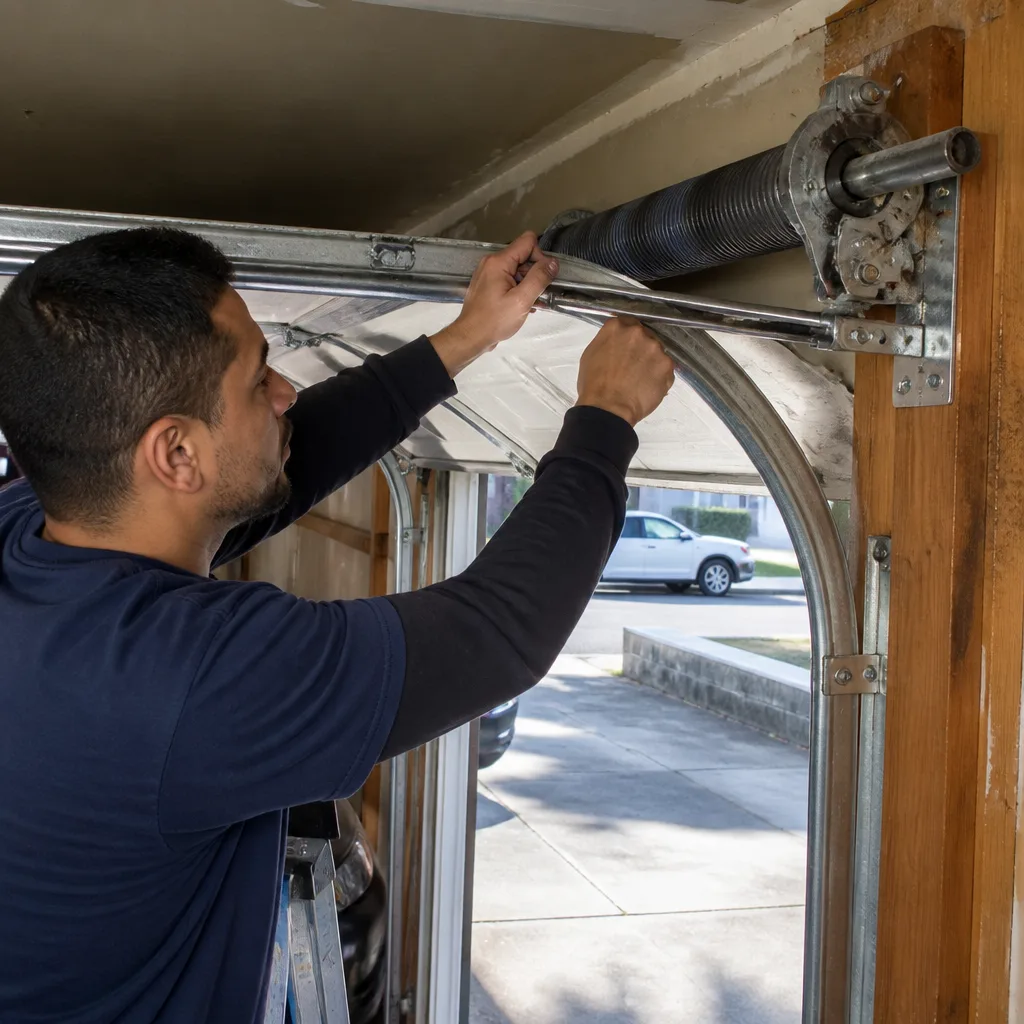 After
AfterGarage Door Warning Signs: A Long Beach Homeowner’s Reference Guide
Most garage door failures in Long Beach announce themselves weeks before the door actually stops working. The problem is that the warning signs read like background noise: a slight grind here, a half-second hesitation there, a door that only occasionally misbehaves. By the time the torsion spring snaps or the cable frays through, the underlying cause has usually been visible for a month. This guide maps specific symptoms to specific components, teaches you which sounds are urgent and which can wait, and gives you the vocabulary to know whether the diagnosis you’re hearing from any technician holds up. For a broader overview, see our The Complete Guide to Garage Door in Long Beach. We’ve been repairing garage doors across Long Beach since 2015, and we’ve learned that the homeowners who catch failures early are the ones who know what to look at and what it means. This is that reference.
Quick Answer
A garage door that grinds, sags, reverses mid-close, responds slowly, or shows an uneven gap at the bottom is usually reporting a specific mechanical problem: worn rollers, a failing torsion spring, a drifting limit switch, or a stressed cable. None of these symptoms improve on their own, but several of them are inexpensive to correct when caught early. The most important skill is matching the symptom you’re seeing to the component that’s failing, so you can judge whether a repair quote is honest and complete.
Table of Contents
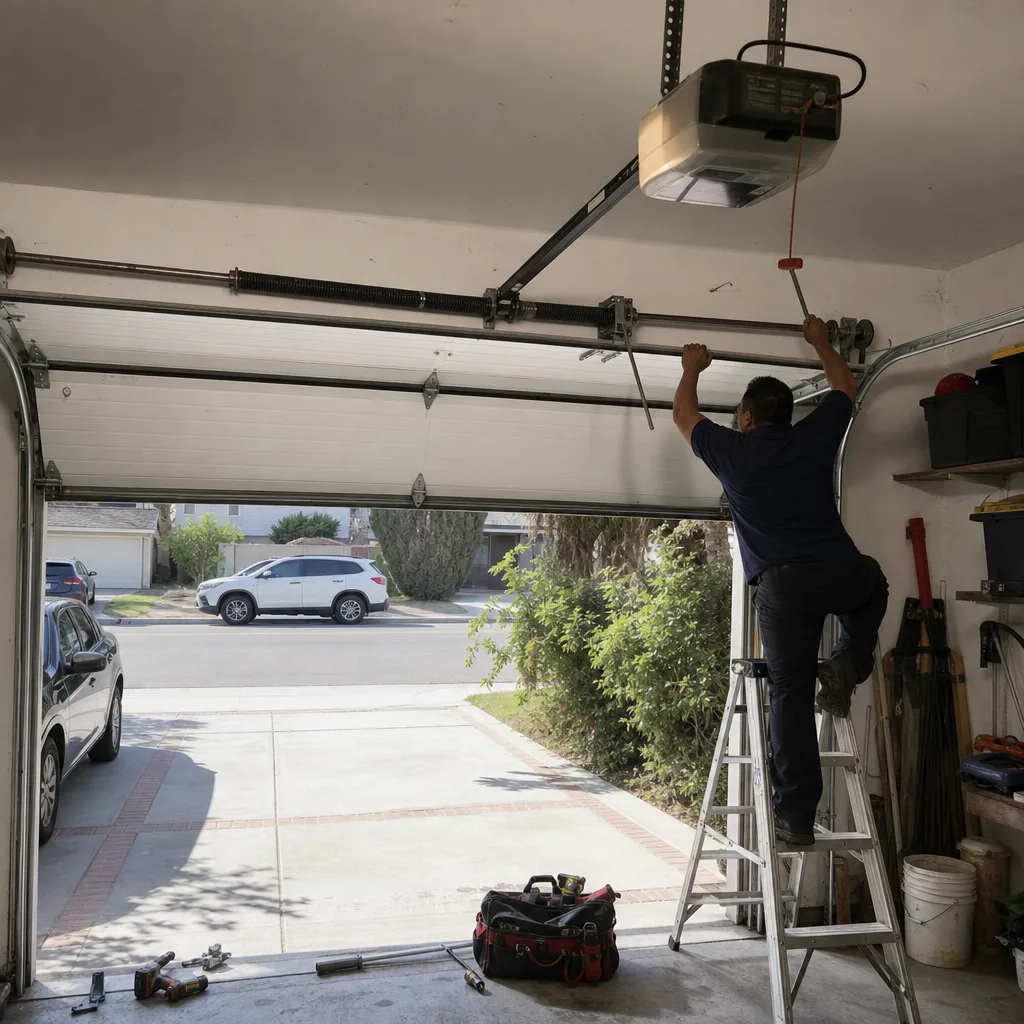
- Sound That Fails: What Your Door Is Saying
- The Symptom-to-Component Index
- Sensor Misalignment vs. Force Calibration: The Paper Towel Test
- Why Intermittent Failures Are More Urgent Than Consistent Ones
- Visual Inspection Points: Cables and Springs
- What Long Beach Specifically Does to Garage Doors
- Common Mistakes to Avoid
- When to Call a Professional
- Frequently Asked Questions
- The Bottom Line
BeforeAfterSound That Fails: What Your Door Is Saying
Garage doors make noise. Some of it is normal, some of it is a maintenance cue, and some of it is a mechanical component asking to be replaced before it fails catastrophically. The distinction matters because the urgency levels are completely different. In Long Beach, where attached garages sit directly under bedrooms and home offices, the sounds tend to get noticed faster than in the suburbs. What we’ve learned in ten years of service calls is that homeowners usually lump all door noise into one category called “the door is making noise.” The useful approach is to separate it into three groups.
Maintenance Sounds (Address Within a Few Weeks)
These are the sounds that indicate wear on a replaceable part, not a structural failure in progress. They are not emergencies, but they will get worse and eventually shorten the life of adjacent components.
- Roller chatter or squeak: Metal rollers on metal tracks make a high-pitched metallic rolling noise when the bearings wear out. If the rollers have never been replaced, this is likely the issue. Nylon rollers with sealed bearings are the standard replacement in Long Beach because they run quieter in the coastal humidity and don’t rust.
- Track rattle: A low-frequency rattle that happens at the same point in the travel cycle usually means a track bolt has loosened or the track has shifted slightly out of parallel. This can be corrected with an alignment adjustment and is not a component failure.
- Opener whine under load: A LiftMaster or Chamberlain opener that whines only when the door is moving, but is quiet otherwise, may be working against increased friction from worn rollers or a door that needs lubrication. The opener is reporting a problem elsewhere.
Imminent-Failure Sounds (Call Within the Week)
These sounds indicate a component under stress that is approaching its breaking point. The door will fail, and when it does, it is more likely to fail unsafely.
- Spring stress sounds: A torsion spring that creaks or pops when the door moves is reporting metal fatigue. Torsion springs are rated for a certain number of cycles, typically 10,000 to 20,000, and when they are near the end of that rating, the metal itself sounds different under tension. This is a call-us-this-week sound.
- Cable popping or clicking during movement: Lift cables under a fraying strand will sometimes make a soft popping sound as individual wires snap under tension. This is the precursor to a full cable break. In our experience across Long Beach, cable failures almost never happen without at least a few days of audible warning.
- Opener grinding without door movement: This usually means the gear inside the opener’s motor head has lost teeth, or the trolley carriage that pulls the door along the rail has stripped. The opener motor runs but the connection to the door has failed.
Failure-Imminent Sounds (Stop Using the Door)
- Loud bang from above the closed door: This is a torsion spring breaking. Torsion springs are under several hundred pounds of stored tension, and when one fails, it releases that energy suddenly. If the door is operated with one broken spring, the opener or the remaining spring takes the full unbalanced load, which risks further damage and personal injury.
- High-pitched metallic snap followed by sudden slack: A lift cable has failed. With one cable broken, the door can no longer lift evenly, and attempting to open it can derail the door. This requires a qualified technician because the door’s full weight is now being managed by one side only, plus the torsion spring.
The Symptom-to-Component Index
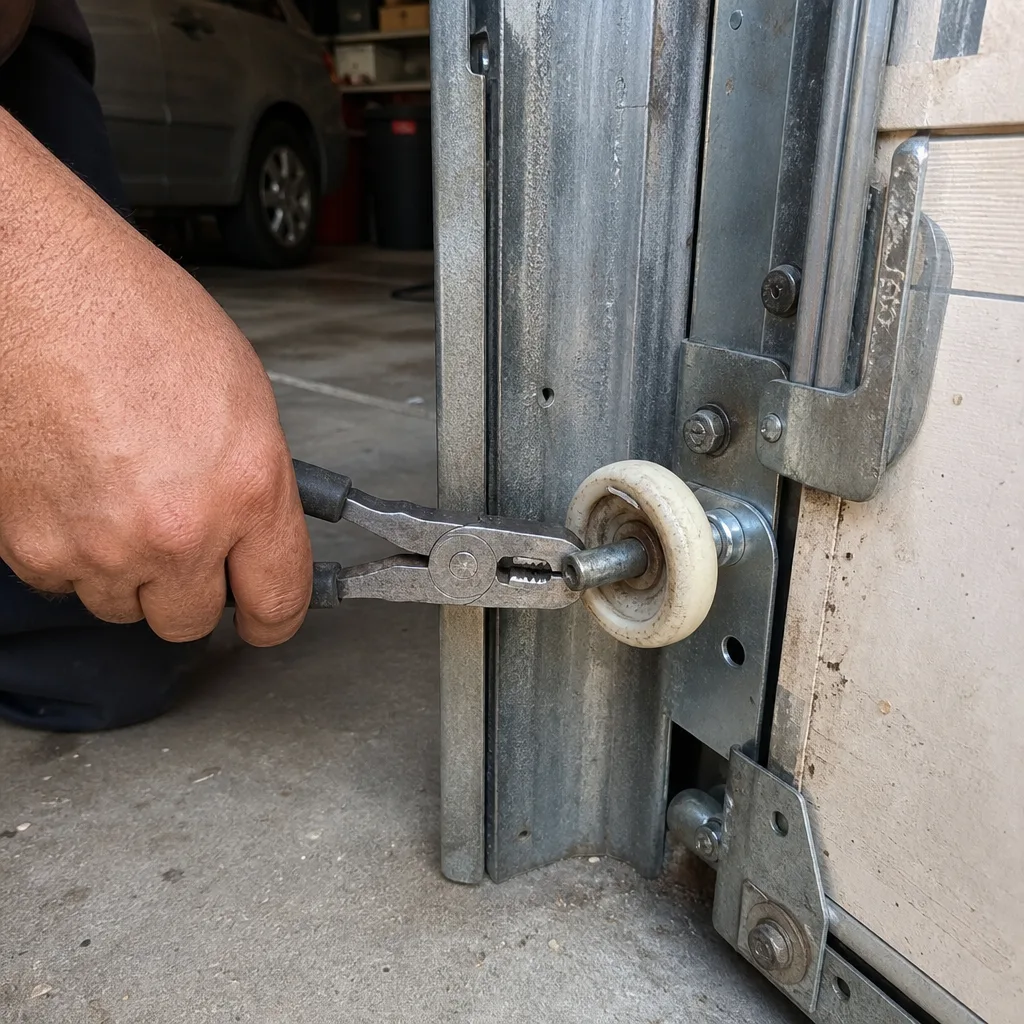
Every observable behavior a garage door exhibits maps to a short list of likely components. Here is the reference chart we use on the phone when a Long Beach homeowner calls and describes what they’re seeing. It is not a substitute for a physical inspection, but it will tell you what questions to ask and whether the quote you receive addresses the actual cause.
- Door reverses immediately after touching the floor or before closing: Most likely a limit switch setting, a force calibration issue, or an obstruction detected by the safety sensors. Less commonly, a broken spring that has shifted the door’s balance and triggered the opener’s reversal circuit.
- Door opens two feet and stops, or opens unevenly: Most likely a broken torsion spring on one side, a frayed lift cable, or a bent track section. The opener is sensing the asymmetry and stopping.
- Door sags or drops when fully open: This is a balance problem. The torsion spring tension is no longer matched to the door’s weight, which means either the spring is fatigued or the door has gained weight (water absorption in a wood door, or accumulated hardware).
- Door moves slowly in one direction only: When slow to open but normal to close, the spring tension is usually the issue. When slow in both directions, suspect the opener’s motor or gear assembly, often on a Genie or Raynor opener that has seen ten-plus years of service.
- Door shakes or rattles vertically during travel: Usually the panels themselves. Loose hinges, a broken panel connection, or a track that has shifted out of alignment will cause this. It is not the opener.
- Visible gap at the bottom of the door on one side: The door’s weight is not centered on the springs and cables. This can be a broken cable on one side, a spring that has lost tension unequally, or a track that has moved out of parallel. In Long Beach’s salt air environment, we also see this from rusted bottom brackets that have shifted.
- Opener runs but door does not move: The disconnect from the travel is almost always the trolley carriage, the coupler connecting the motor to the rail, or a stripped gear inside the motor head. This is a common failure on openers older than ten years, and on that timeline the repair is often a replacement.
When a symptom maps to more than one component, the correct diagnostic sequence starts with the least expensive possibility and validates it before moving to the next. A technician who skips to the most expensive possibility without showing you evidence of the failure is giving you a sales pitch, not a diagnosis.
Sensor Misalignment vs. Force Calibration: The Paper Towel Test
When a garage door starts reversing just before it closes, the two most common causes look identical from the homeowner’s side: either the safety sensors have drifted out of alignment, or the opener’s force calibration has become too sensitive. The fix for one is a screwdriver and thirty seconds. The fix for the other is a service call. Here is how to tell them apart without any tools.
The paper towel method: place a paper towel roll crosswise in the center of the door opening, directly under the door’s path. Then operate the door. Watch what happens when the door touches the paper towel.
Interpreting the Result
- If the door reverses immediately when it contacts the paper towel: The sensors are aligned and functioning correctly, because they are not interfering with the close. The reversal is being triggered by force detection, which means the opener’s close-force setting is too sensitive. This is a calibration adjustment inside the opener, typically a dial or a digital setting.
- If the door reverses before touching the paper towel, at a consistent height: The safety sensors at the base of the door have drifted out of alignment. When the sensor beam is interrupted, the opener refuses to continue closing. This is visual: the small LED light on each sensor will be flickering or dark rather than solid. This is a simple realignment.
- If the door closes fully on the paper towel without reversing at all: The force calibration is set too high. The opener is not detecting resistance properly, which means it would also not detect a person or a bicycle. This is a safety correction that should be done promptly.
What we see most often in Long Beach is the first scenario, where a homeowner has been told the sensors need replacing when in fact the force setting drifted. Force-sensing drifts on LiftMaster and Chamberlain openers as they age, and that is a calibration adjustment, not a part replacement. Knowing the difference has saved more than a few of our customers from a two-hundred-dollar part they didn’t need.
Why Intermittent Failures Are More Urgent Than Consistent Ones
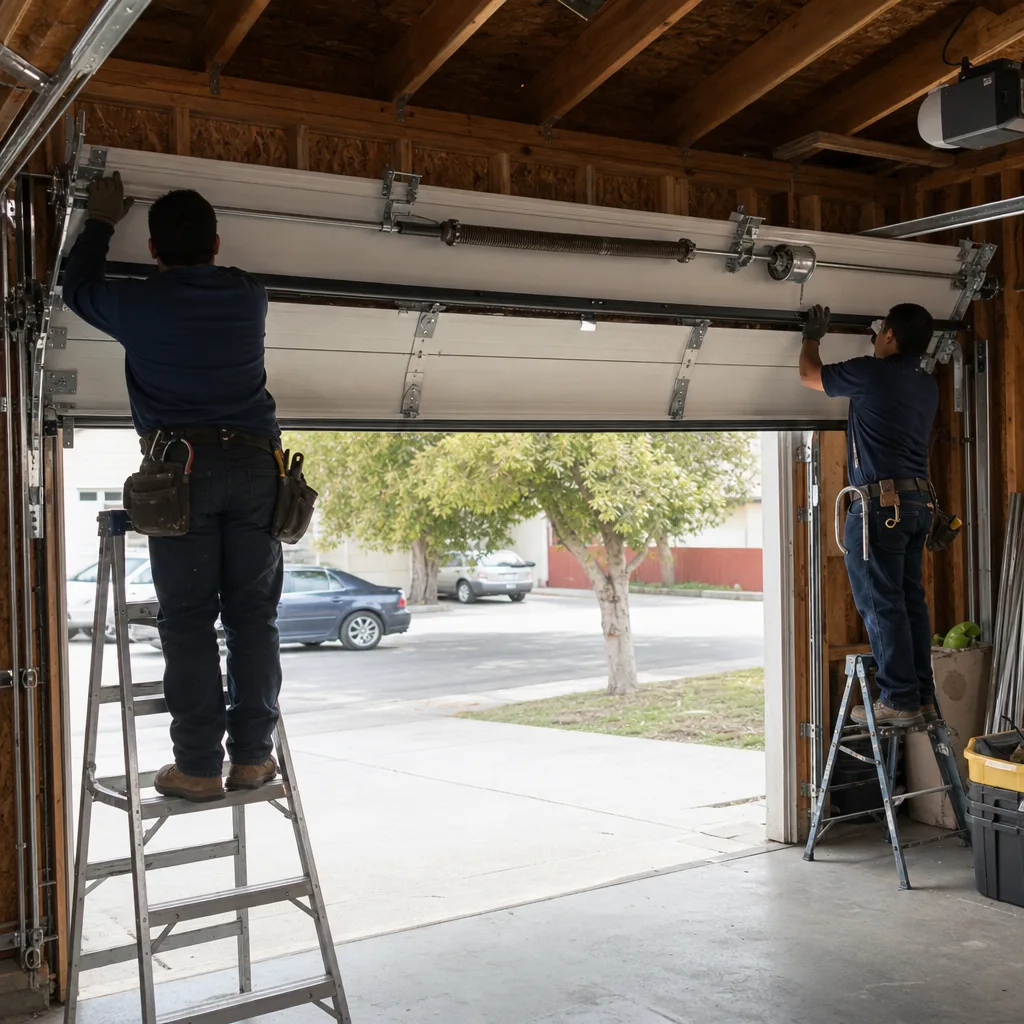
A garage door that fails every time is a diagnostic problem with a known component. A garage door that fails once in every ten operations is a diagnostic problem with a component that has not yet fully failed, which makes it harder to isolate and more dangerous in the meantime. The intermittent fault is the one that worries us most when a Long Beach homeowner describes it over the phone.
The reason is mechanical. When a component is in the process of failing, it stops performing under specific conditions that vary from cycle to cycle. A torsion spring that has micro-cracks near the end of its fatigue life will only bind when the door is at a certain temperature. A logic board with a failing solder joint on a Chamberlain opener will only misbehave when the board warms up. A lift cable with one or two snapped strands out of a bundle will only snag intermittently as the strands shift. These are all components that will fail completely, but the failure window is unpredictable.
The consistent failure is actually the safer case because the door has stopped working and the problem announces itself. The intermittent failure is a door that works fine every time you test it, and then fails when you are rushing to work with a car half in the garage. In our experience with Long Beach service calls, intermittent failures account for the most dangerous close calls, because the homeowner has been lulled into believing the door is basically fine. If your door misbehaves once in a while, the correct response is to treat it as a failing component that simply hasn’t fully broken yet. Schedule the inspection before the intermittent behavior becomes a full failure at the worst possible moment.
Visual Inspection Points: Cables and Springs
Two components on a garage door are under the highest tension: the torsion spring, which stores the energy that counterbalances the door’s weight, and the lift cables, which transfer that energy to the bottom corners of the door. Both can be visually inspected by a homeowner without any tools, and both show deformation before failure. Here is what each failure precursor looks like.
Lift Cables
The lift cable is a braided steel cable that runs from the bottom bracket at each corner of the door up to the torsion assembly above the opening. To inspect, leave the door closed, stand inside the garage, and look at each cable along its full length.
- Fraying: Individual wire strands will separate from the main bundle and curl away, looking like small steel whiskers. This means the cable has already lost structural integrity. A frayed cable is a replacement item, not a repair item.
- Kinking: A sharp bend or twist that remains after the cable has been under tension means the cable has been momentarily overloaded, usually from the door jamming while opening. A kinked cable will snap at that point, and the snap location is predictable because the deformation weakens the metal at exactly that spot.
- Rust or pitting: In Long Beach’s coastal air, cable rust is a legitimate component-lifetime factor. Surface rust is cosmetic; pitting, where the metal has actually lost material, is structural. If you can see daylight through a section of cable rust, the cable’s load rating is no longer valid.
Torsion Springs
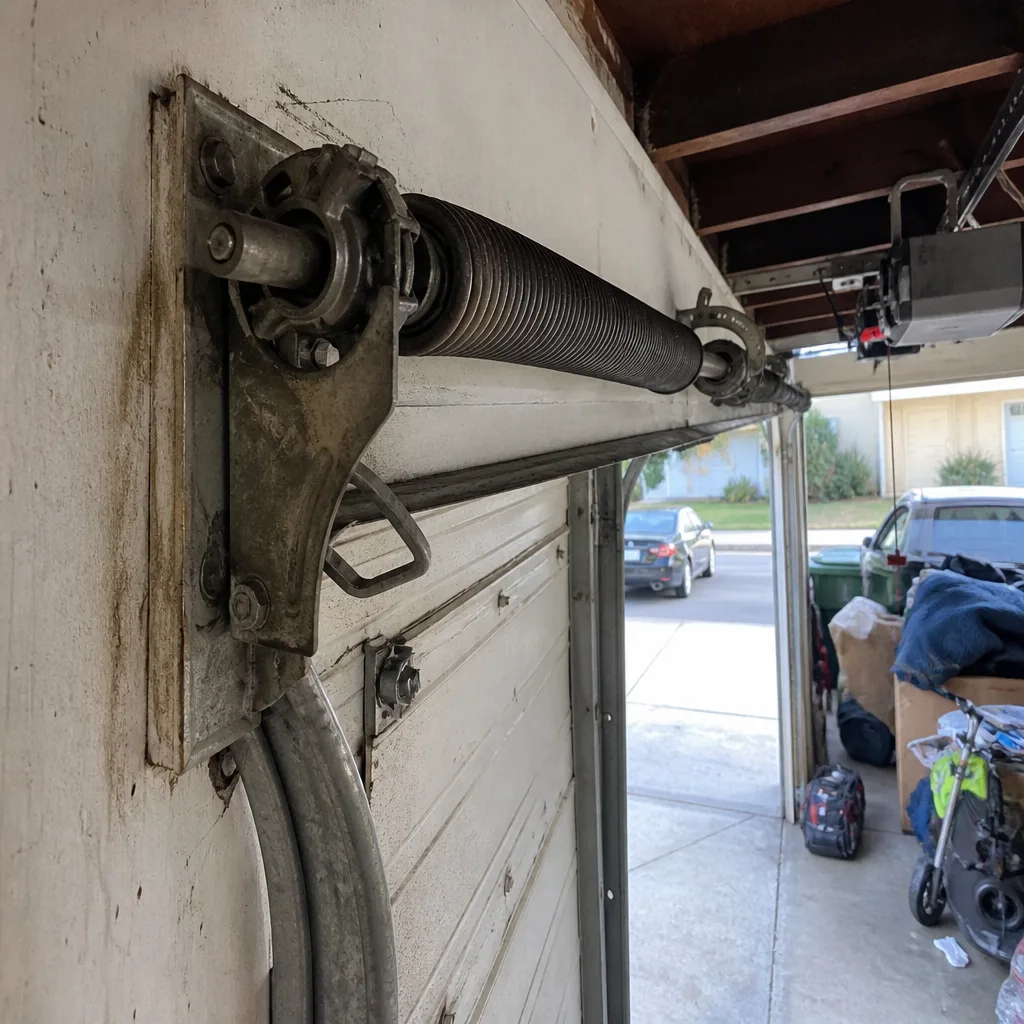
The torsion spring sits above the closed door, mounted on a horizontal shaft. You can inspect it from inside the garage without touching it. A torsion spring under tension stores enough energy to cause serious injury if mishandled, so this is an eyes-only inspection.
- Visible gap in the coil: Every torsion spring has a continuous spiral. When the metal fatigues, the break is usually clean and the two halves separate cleanly, leaving a visible gap in the coil. This is the failed spring, and it is the one component homeowners most often report hearing when it fails.
- Rust staining at the coils: Rust that follows the coil pattern means the outer surface of the spring metal is degrading. A torsion spring that shows patterned rust has lost cycle life, because the corrosion creates stress concentrations at exactly the point the spring flexes on every cycle.
- Deformed coil spacing: The coils on a healthy spring are evenly spaced. If you see a section where the coils have compressed together or separated wider than the rest, the spring has been overloaded at that point and the fatigue life is spent. This is a less common failure mode but we’ve seen it on Long Beach doors that have been forced manually after an opener failure.
Both components are service items. Cables and springs are not retrofit-and-forget parts; they are consumable components rated in cycles. The relevant fact for a Long Beach homeowner is that the average attached garage door goes through four to six open-close cycles per day, which is roughly 1,500 to 2,200 cycles per year. A 10,000-cycle spring is therefore good for four to six years of typical use. If your door is older than that and you have never replaced the springs, you are driving on expired components.
What Long Beach Specifically Does to Garage Doors
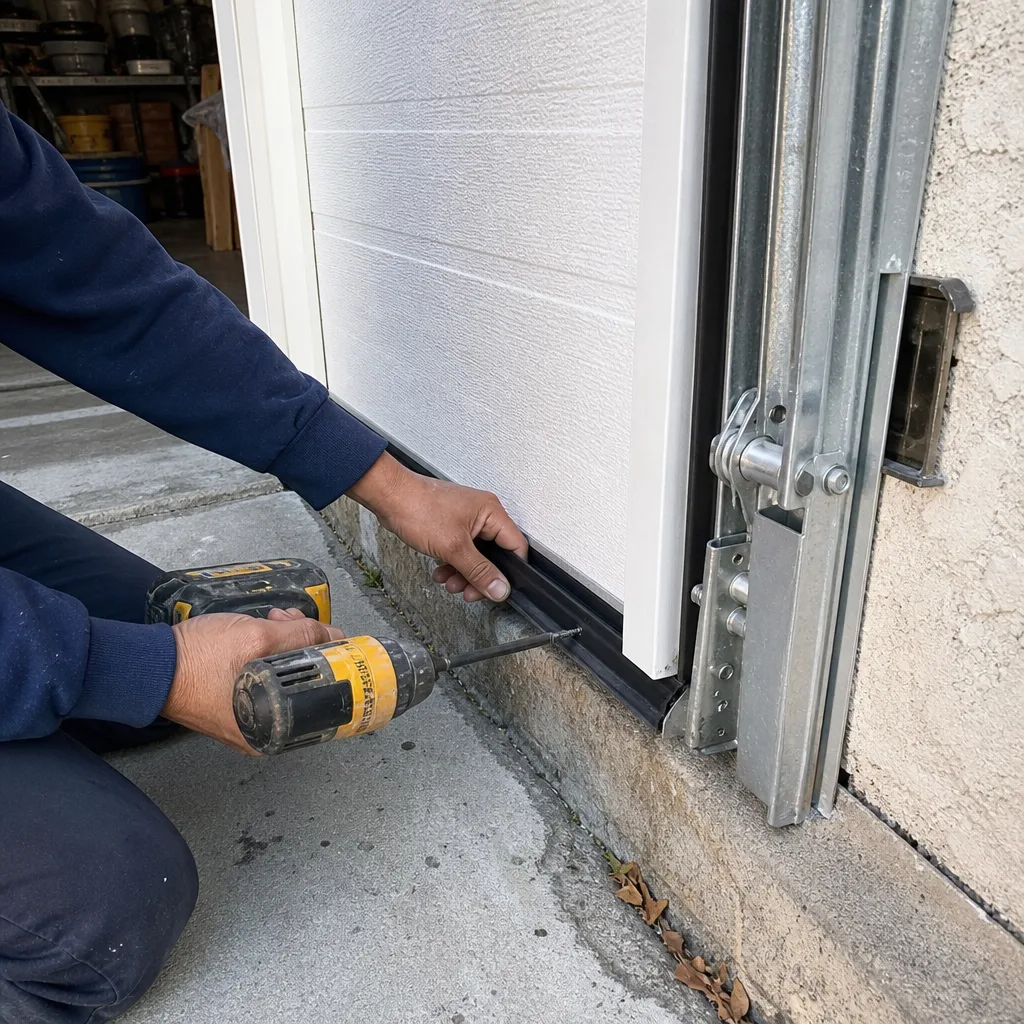
Every climate has a failure mode it specializes in. Long Beach’s version is salt air corrosion combined with marine-layer humidity, which makes rust a first-class citizen in garage door component wear. Here is what that means for your door specifically.
Rust Is Not a Coating Problem, It’s a Structural One
The galvanized coating on steel hardware and the zinc plating on springs and cables is designed to resist corrosion in typical conditions. Long Beach’s coastal proximity means airborne salt droplets settle into every crevice, and the marine layer holds moisture against the metal for hours at a time. We see hardware on Long Beach doors that matches the age of hardware we see on interior garage doors in the desert, but with two or three times the corrosion depth. This matters for springs because rust on a torsion spring is not just cosmetic: the corrosion creates microscopic surface pits, and each pit is a stress concentrator that accelerates fatigue cracking. The spring that fails at 8,000 cycles in Long Beach may have done 14,000 cycles in a dry climate.
Wood Doors Absorb the Marine Layer
If your Long Beach home has a wooden garage door, the marine layer affects it differently: wood absorbs the humidity, gains weight, and then dries out over the course of the day. This daily cycle adds stress to the torsion springs, because the spring is now counterbalancing a door that changes weight by several pounds over the course of each day. The result is accelerated spring fatigue, and in our experience, wood doors in Long Beach need spring replacement on the shorter end of the cycle range.
Track Alignment in Earthquake Country
This is a Long Beach-specific factor that doesn’t appear in most garage door guides. We’re in a seismically active area, and even the micro-adjustments from small quakes can shift garage door tracks over time. A track that moves a quarter-inch out of parallel creates uneven roller drag, which then loads the springs asymmetrically. If you’ve had any seismic activity in the past year and your door has started to groan or bind, the track alignment is the first thing to check. This is also a reason why the visual inspection of your cables matters: a cable that runs against a slightly bent track will fray at the contact point, and you’ll see the evidence. If you’re planning to hire help, our How to Hire a Garage Door Contractor in Long Beach: A Step-by-Step Guide covers what to look for.
Common Mistakes to Avoid
- Ignoring the intermittent fault: A door that works nine times out of ten is not “mostly fine.” It is a failing component that has not yet failed completely. The intermittent behavior is the warning, not an acceptable operating mode.
- Lubricating over rust: Spraying lubricant over a rusted roller or hinge will quiet the noise for a week or two, but it does not address the underlying wear. Maintenance is not a repair, and a quiet failing component is a failure without a warning sound.
- Assuming the opener is the problem when the door is slow: The opener is a motor on a rail. When the door moves slowly, the more common cause is a spring that has lost tension or worn rollers that are adding friction. A technician who immediately recommends a new opener without testing the spring balance is not doing a diagnosis.
- Replacing one spring instead of both: Torsion springs are rated in cycles, and if one has failed, the other is at the same cycle count. A door with one new spring and one fatigue-aged spring is a door with an unbalanced tension distribution, which will fail again soon. This is a cost-cutting step that costs more later.
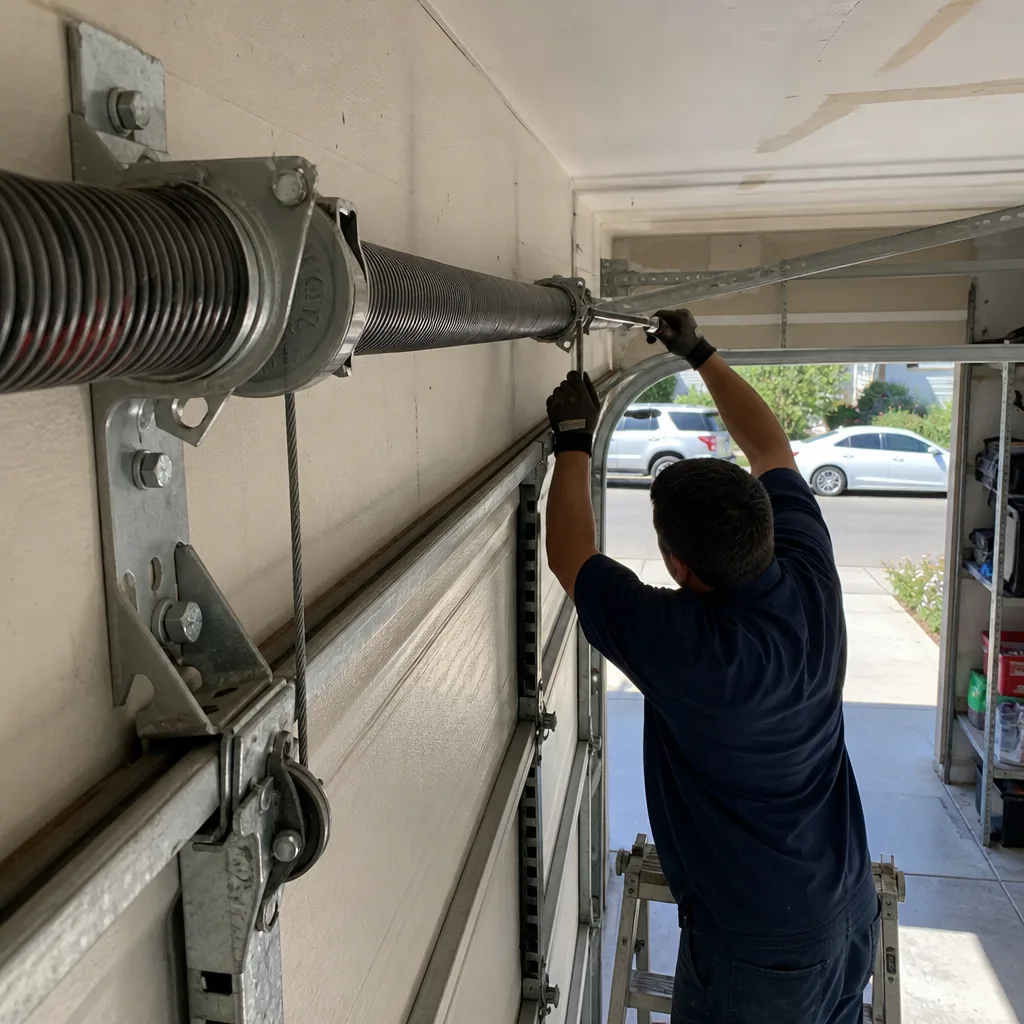
- Attempting DIY spring or cable work: Torsion springs and lift cables are not beginner projects. The stored energy in a torsion spring under tension equals a missile under load. Professionally trained technicians work with winding bars and a specific procedure, and every step is designed around safety. We have never seen a homeowner successfully save money by attempting a spring repair. We have seen several who paid more for the resulting damage.
- Using a door with a broken cable “just to get the car out”: With one cable broken, the door is supported unevenly, and the remaining cable is taking an unload-rated load. Operating the door in this condition can derail the door entirely. This is not a small job if it happens; the door comes off the track and can fall in place.
When to Call a Professional
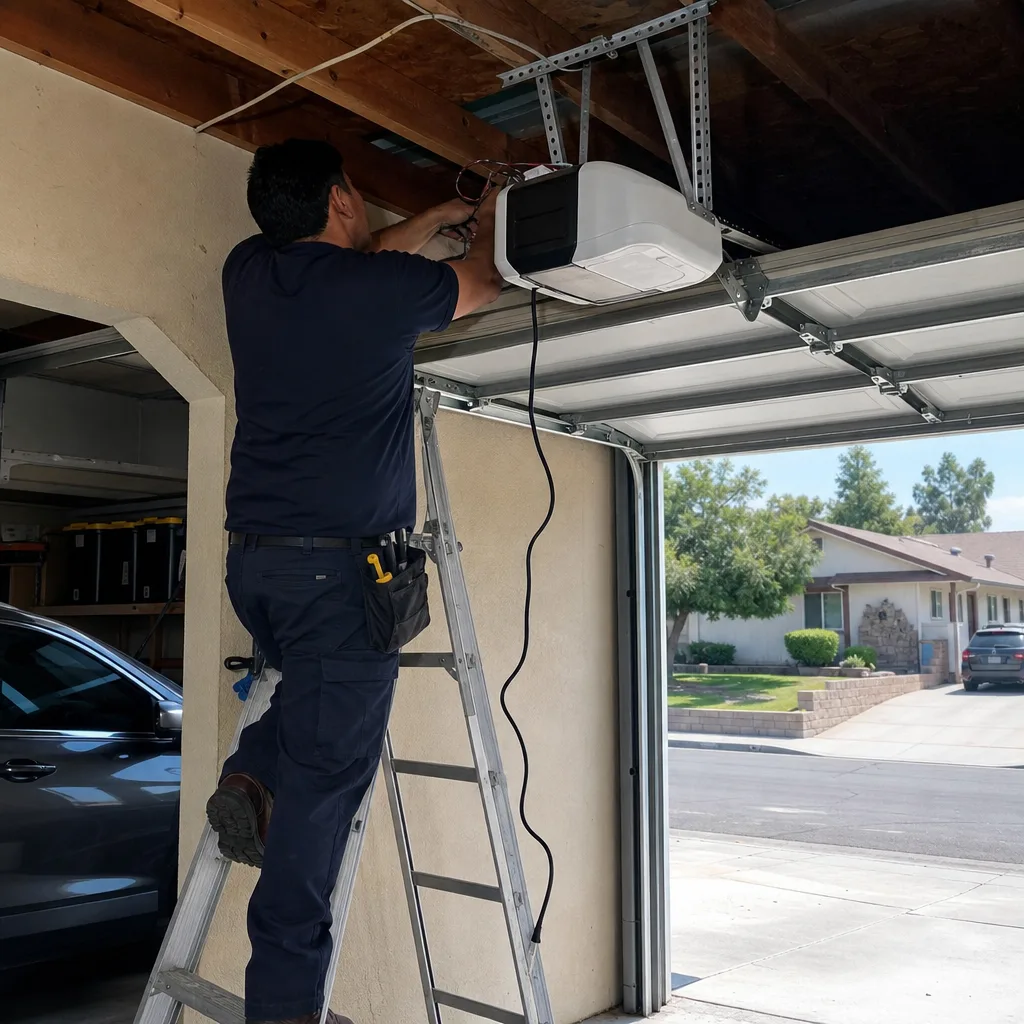
You should call a garage door professional when any of the following apply: a torsion spring shows a visible gap or patterned rust; a lift cable shows fraying or kinking; the door is off-balance and sags when open; the opener runs without moving the door; or you see any of the intermittent failure patterns described above. These are not DIY conditions, and the safety stakes are real. A torsion spring under tension is a stored-energy device, and a cable failure under load can drop a door that weighs between 150 and 400 pounds. This is the point where a paper trail matters more than a verbal reassurance. Garage Door Repair in Long Beach should always include a written price and a written scope before work starts, and a documented photo record of the failed component when the job is done. Servo Garage Doors Long Beach offers free estimates in Long Beach - call (424) 688-6426.
Frequently Asked Questions
Most garage door repairs in Long Beach fall between $150 and $450. Roller replacement is typically $120 to $180, a sensor realignment or force calibration is $90 to $150, a cable replacement is $180 to $260, and a torsion spring replacement for a standard double door is $280 to $450 for a dual-spring conversion. Every repair we do includes a flat written price and written scope before work begins - Clause 1 of The Haven Standard.
Yes. Servo Garage Doors Long Beach runs repair trucks across Long Beach every day, and most spring, cable, and roller repairs are completed in a single visit. The exception is installation work, which requires measuring and ordering. Call (424) 688-6426 and a live person answers - no callbacks, no voicemail trees.
No. The price is written and agreed before any work begins. If a second issue is discovered during the repair, that is quoted separately in writing before we proceed. The written price you sign is the price you pay. That is not a promise we make verbally; it is Clause 1 of The Haven Standard, and it is not negotiable.
Yes, for repair work. Our Long Beach trucks carry torsion springs, extension springs, cables, rollers, hinges, sensors, limit switches, and commonly replaced opener components from LiftMaster, Chamberlain, Genie, Raynor, and the other major brands. Garage Door Opener Repair & Installation work is typically completed same day because the parts are already on the truck.
We service and install all eight major brands, including LiftMaster, Chamberlain, Genie, Clopay, Amarr, Wayne Dalton, Craftsman, and Raynor. The brand on the door does not affect our diagnostic process, but it does mean we carry the right parts for the equipment already in your Long Beach home. For new installation work, we can quote several Garage Door Installation in Long Beach options with written pricing on each.
Stop using the door. The bang was almost certainly a torsion spring breaking. The door is now supported by the remaining components, which are not rated for the full load. This is an emergency repair, and it is one we answer 24/7 with a live person and a named technician. Call (424) 688-6426. For more context on our home market, the Servo Garage Doors Long Beach home page explains the full service area and the documentation system we use on every job.
The Bottom Line
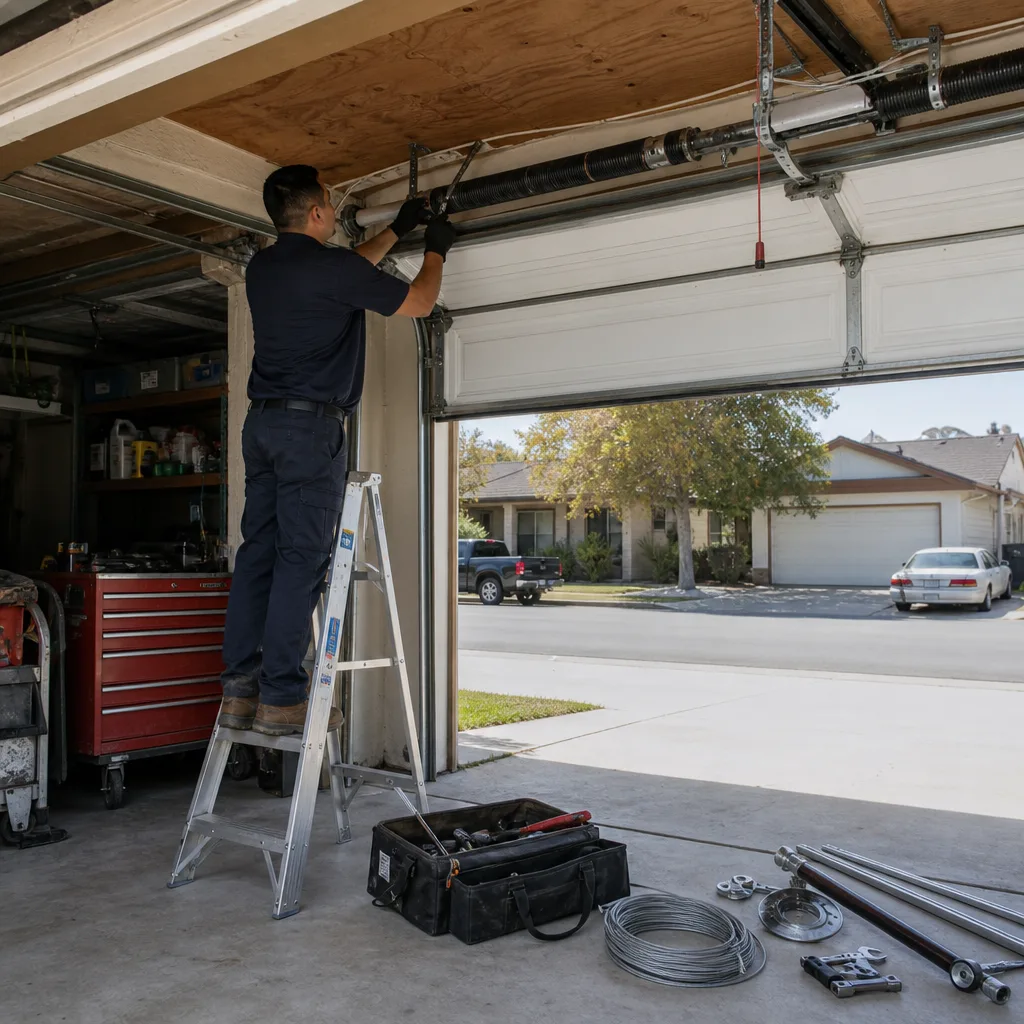
Your garage door reports its own health constantly, in sounds, in movements, and in visible deterioration. The skill is learning to read the report. A grinding roller is maintenance. A popping cable is a warning. A gap in a torsion spring is a failure already in progress. Most Long Beach garage door emergencies we respond to each year had been announcing themselves for weeks before the homeowner recognized the symptom. The sooner you match what you’re seeing to what it means, the more options you have - and the better positioned you are to evaluate any repair quote you receive. Watch the door. It tells you what it needs.
Written by Marcus Deller, Owner at Servo Garage Doors Long Beach, serving Long Beach since 2015.